Now Reading: Love the Submarine Museum in Vizag? Here are 11 unique museums in India you must visit!
- 01
Love the Submarine Museum in Vizag? Here are 11 unique museums in India you must visit!
Love the Submarine Museum in Vizag? Here are 11 unique museums in India you must visit!
If you’ve had your interest piqued by the INS Kursura Submarine Museum in Visakhapatnam, you’re not alone. One of the city’s most iconic attractions, it offers a rare chance to step inside a decommissioned Soviet-built I-641 class submarine. Complete with its original weaponry and fittings, the museum provides a visceral peek into the daily lives of submariners. As the first of its kind in Asia, it fascinates both locals and tourists alike with its authenticity and historical significance. If you’re someone who enjoys unique, experiential museums like this, India has plenty more to offer – each one shedding light on unusual aspects of life, culture, science, and history.
From quirky innovations and secret trap doors to relics of witchcraft and ancient sanitation practices, these one-of-a-kind museums across the country promise to surprise and educate. Here’s a curated list of the most unique, unconventional and fascinating museums in India that deserve a place on your travel list:
1. Sudha Cars Museum, Hyderabad
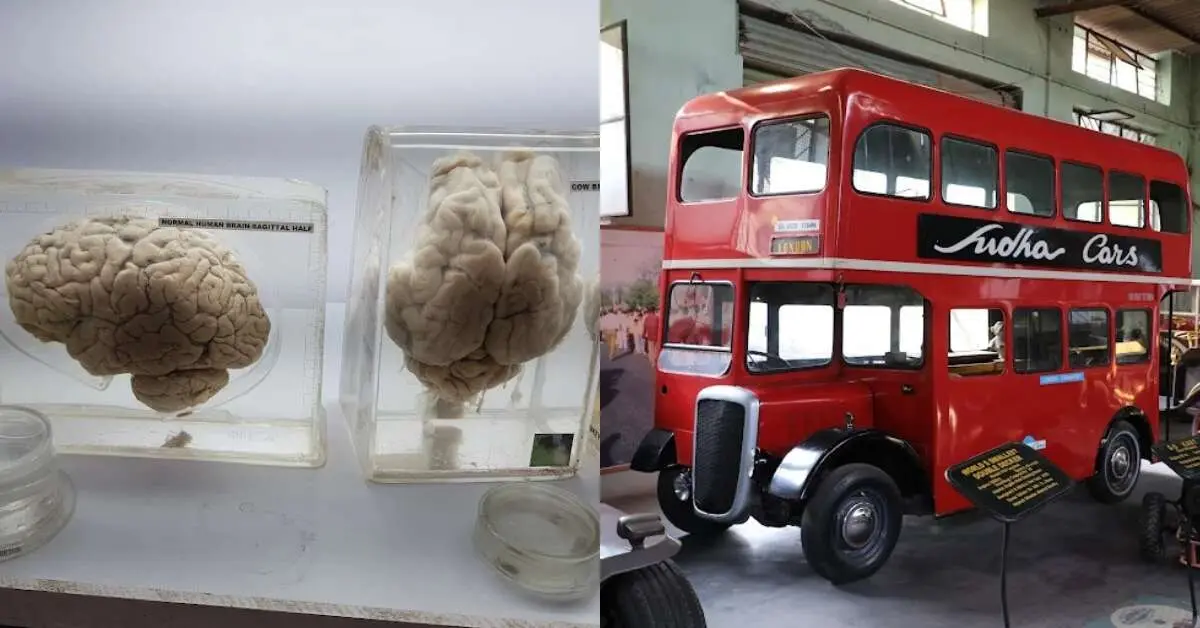
 Founded in 2010 by Kanyaboyina Sudhakar, a Guinness World Record holder for building the world’s largest tricycle (41 feet tall), this museum is the world’s only handmade car museum.
Sudhakar has created bizarre yet functional vehicles shaped like cameras, handbags, shoes, books, and even sofas. Each car is accompanied by a detailed information plaque noting its specs, cost (typically between ₹85,000 and ₹150,000), and manufacturing time. Though not for sale, these whimsical vehicles are occasionally featured in roadshows.
The museum also boasts an impressive selection of vintage cars and tiny motorcycles, the smallest being just 33 cm tall and capable of reaching 30 km/h.
2. Bhausaheb Rangari Bhavan Museum, Pune
 This 19th-century heritage mansion, built by Shrimant Bhausaheb Lakshman Jawale, popularly known as Bhausaheb Rangari, hides a world of secrets. Known for his role in dyeing royal garments, he designed his 1883-built wada (mansion) with hidden basements, secret trapdoors, and unique security mechanisms. The exciting house has been converted into a museum, with its hidden rooms and doors still intact and ready to be explored.
Today, the house is a museum showcasing antique flintlock pistols, rifles with inscriptions, an iron safe by Thomas Withers of West Bromwich, and a covert observation room.
Hidden chambers, used for storing rations or hiding people, are still intact. The entire museum is dotted with plaques offering context about the family, the mansion, and its architectural marvels.
3. Sulabh International Museum of Toilets, Delhi
 Run by the Sulabh International NGO, this museum offers a surprisingly enlightening experience dedicated to the evolution of sanitation. The single-room exhibit space includes artifacts from the Harappan era, ornate Victorian toilets (including a jewel-studded bidet), a 16th-century flush pot, and even a royal commode from Louis XIII’s court disguised as a throne.
Despite its quirky premise, the museum conveys the serious importance of hygiene and sanitation through history, blending humor, innovation, and social commentary.
4. International Dolls Museum, Delhi
 Founded by political cartoonist K Shankar Pillai, this museum features over 6,000 dolls from 85+ countries. The museum is split into two sections – one featuring dolls from Western countries (USA, UK, Australia, etc.) and the other from Asia, Africa, the Middle East, and India.
A standout highlight is the 150 Indian costume dolls crafted in-house, replicating traditional attire, ornaments, and physical features with precision. Other global attractions include Flamenco dancers from Spain, Kabuki and Samurai dolls from Japan, and Queen Elizabeth’s doll replicas from the UK.
5. National Rail Museum, New Delhi
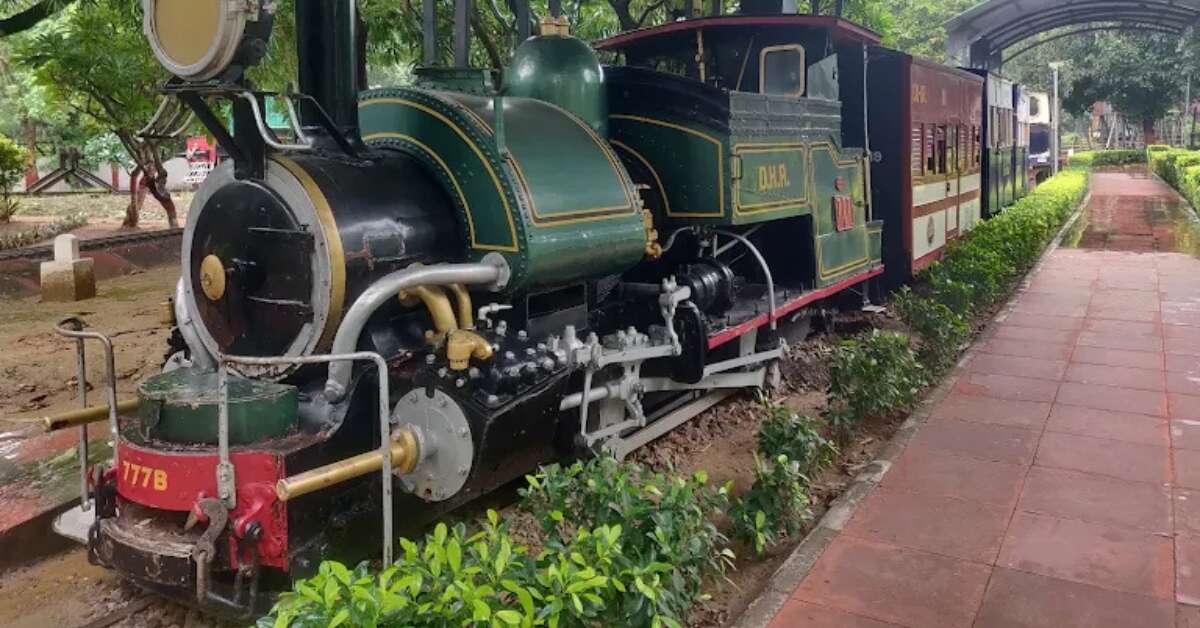 Sprawled across 11 acres, this museum showcases the evolution of Indian railways through full-size steam, diesel, and electric locomotives, including royal saloons, armored trains, and wagons.
Opened in 1977, the museum also houses an indoor gallery with historical photographs, antiquated railway items, and interactive exhibits. A paradise for railway enthusiasts, it bridges the past and present of Indian transportation like no other.
6. Mayong Central Museum and Emporium, Guwahati
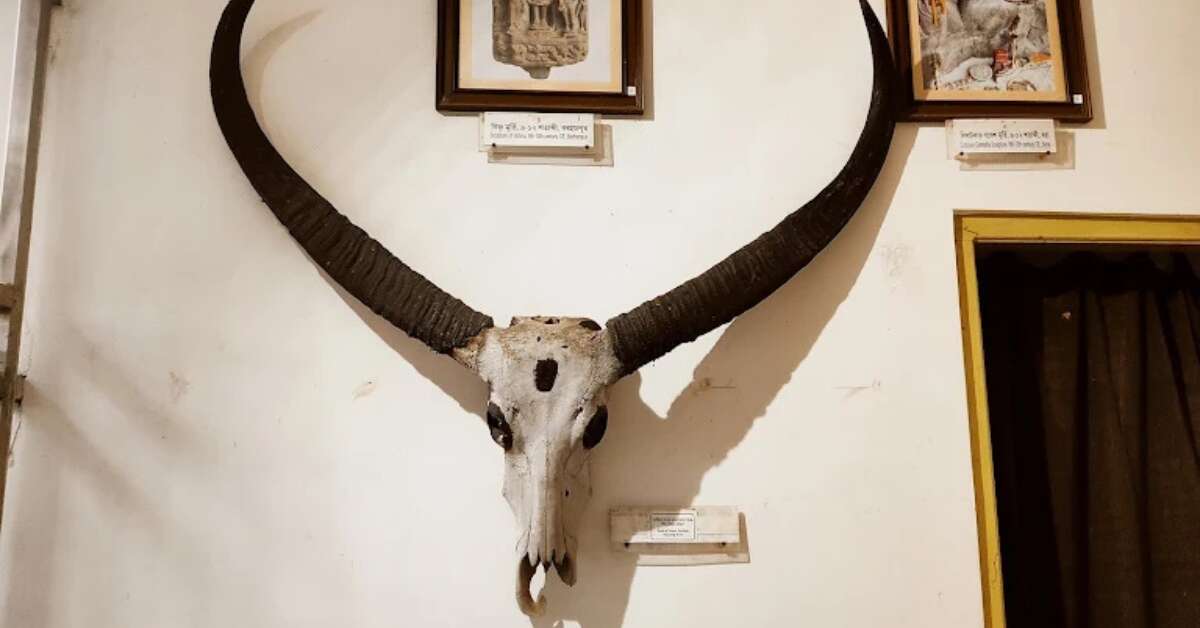 Known as the “Land of Black Magic,” Mayong village in Assam hosts this mysterious museum devoted to tantra, sorcery, and ancient occult practices.
Inaugurated on November 1, 2002, the museum contains witchcraft manuscripts, ritual swords, coins, bone-and-shell jewelry, bronze figurines, and Ayurveda texts. What sets it apart are live demonstrations of ancient rituals and magic shows by local practitioners.
According to folklore, every family in Mayong possesses some magical relic, many of which are preserved in this museum. It’s both an eerie and enlightening deep-dive into a rarely explored tradition.
7. Museum of Solutions (MuSo), Mumbai
 Located in Lower Parel, this 10-story, 100,000-square-foot children’s museum blends fun with education. Designed around themes like climate change, marine pollution, and poverty, MuSo encourages creative problem-solving through hands-on exhibits.
Four labs – Play, Discover, Make, and Grow – offer sensory workshops, eco-gardening, beekeeping, and more. Facilities include an amphitheater, a library, a recycling center, and even a coffee shop. The museum is a modern take on learning spaces, designed to raise future problem solvers.
8. Neuropathology Brain Museum, Bengaluru
 Situated inside the NIMHANS campus, this one-of-a-kind museum allows visitors to view (and even touch) preserved human brains.
With over 400 specimens on display, it includes both healthy and diseased brains affected by conditions like Alzheimer’s, epilepsy, and Parkinson’s. Guided tours (via prior booking) explain cerebral anatomy in detail, supported by interactive stations on neuroscience and brain injuries.
For those curious about human biology, this is a must-visit.
9. Vikram Pendse Cycles Museum, Pune
 Located in a bungalow in Karve Nagar, this private museum by cycling enthusiast Vikram Pendse features a nostalgic collection of vintage and rare bicycles from around the world.
From early 20th-century penny-farthings to racing bikes, each cycle tells a story of technological and cultural evolution.
Supplemented by old posters, photographs, and accessories, the museum pays homage to the bicycle’s legacy and its role in eco-friendly transport.
10. Veechar Utensils Museum, Ahmedabad
 Established in 1981 by Surendra Patel alongside anthropologist Jyotindra Jain, this museum features over 4,500 unique utensils from rural and urban Indian households.
Part of the Vishalla restaurant complex, it displays objects made of brass, bronze, terracotta, silver, ivory, and even gold inlay.
The exhibits—urns, spittoons, pots, locks, and jugs—are arranged along a long U-shaped rustic corridor. It’s the world’s only museum solely dedicated to the history and artistry of everyday kitchen tools.
11. RBI Monetary Museum, Mumbai
 Launched in 2004 as part of the Reserve Bank of India’s educational initiative and inaugurated by President Dr A P J Abdul Kalam, this museum traces India’s monetary history from barter systems to digital transactions. It features rare coins from the 6th century BCE, gold bars, colonial paper money, and various financial instruments.
Divided into thematic zones, the museum educates visitors about the socioeconomic and political contexts in which different currencies evolved.
Each of these museums offers something distinctively unique – whether it’s the thrill of hidden chambers or the eeriness of ancient sorcery in India. Just like the INS Kursura Submarine Museum in Visakhapatnam, these hidden gems across India elevate museum-going from a passive visit to an unforgettable experience.
Which of these unique museums in India are you adding to your travel bucket list next?
Stay tuned to Yo! Vizag website and Instagram for more travel articles.