
Now Reading: Varalakshmi Vratham: Traditions, Rituals and Memories of Shravana Masam
-
01
Varalakshmi Vratham: Traditions, Rituals and Memories of Shravana Masam
Varalakshmi Vratham: Traditions, Rituals and Memories of Shravana Masam

As soon as August hits, a lot of Indian people have the tradition of deep-cleaning their homes in preparation for the auspicious festivals that follow. The shopping frenzy reaches a new high as seasonal business spikes, with people flocking to purchase clothes, especially sarees, gold, home decor, and puja items. Even conversations, from neighbours to relatives, shift towards festive preparations for this auspicious time – Shravana Masam.
And Shravana Masam, in all its grandeur, does not arrive silently. You know the season is here as soon as you are engulfed by the aroma of mango leaves peeking through door frames, set against plump marigold flowers, while kolam powder steals all the attention with its geometric muggulu, mastered by few. From witnessing Varalakshmi Vratham being performed as children to actually carrying out the puja ourselves, life comes full circle, rooted in memory and tradition.
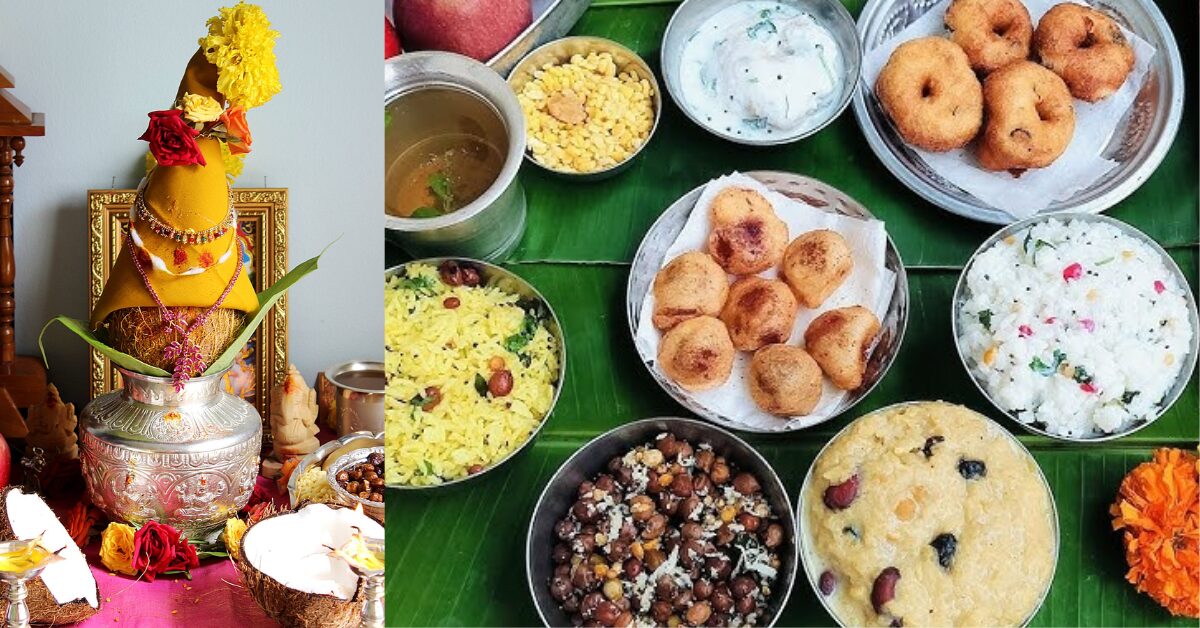
Varalakshmi Vratham is observed on the Friday before Shravana Purnima, with devotees worshipping Goddess Lakshmi and seeking her blessings for prosperity and well-being. Waking up at the crack of dawn and preparing the dishes for the vratham itself is a feat. Hot, piping paramannam with cashews and raisins, pulihora, whether cooked with tamarind or lemon, needs to hit that delicate balance without being too sour, and for daddhojanam, nailing that consistency between curd and seasoning is essential. Senagalu talimpu is a must, while boorelu, garelu, bobbatlu, and all other kinds of sweets soaked in ghee are non-negotiable.
While the naivedyam is being prepared, other elements of the puja are set up in parallel. The kalasham is coated with turmeric and marked with dots of kumkum and sandalwood before being filled with water. Coins are traditionally dropped in as well, followed by mango leaves and flowers. A coconut, similarly coated with turmeric, is placed on top of the kalasham. The goddess’s face is then placed atop a folded blouse piece resting on the coconut. She is then adorned with ornaments, turning the entire preparation into an act of devotion. Year after year, people outdo themselves by setting up mandapams at home, with the goddess standing at the centre of it all.
After performing the vratham, tying the yellow thread symbolic of the sankalpam, and giving thamboolam to other married women in the family and neighbourhood are traditions imprinted in the minds of many. The giggles echoing through the hallways, the ethnic wear we get to flaunt, the turmeric-drenched hands and their lingering smell, the full bellies, all become part of the memory. By the end of it, everyone is content, having almost forgotten the effort that went into the day.
Traditions, whether conceived within our homes or passed down through generations, have a way of bringing us back to where we began. As we celebrate one of the most beautiful Indian festivals today, here’s wishing prosperity, wealth and peace to every Lakshmi of her home.
Also read: From Partition to Your Plate: The Sweet History of Kalakand
Stay tuned to Yo! Vizag website and Instagram for more such articles.