Now Reading: From Partition to Your Plate: The Sweet History of Kalakand
-
01
From Partition to Your Plate: The Sweet History of Kalakand
From Partition to Your Plate: The Sweet History of Kalakand

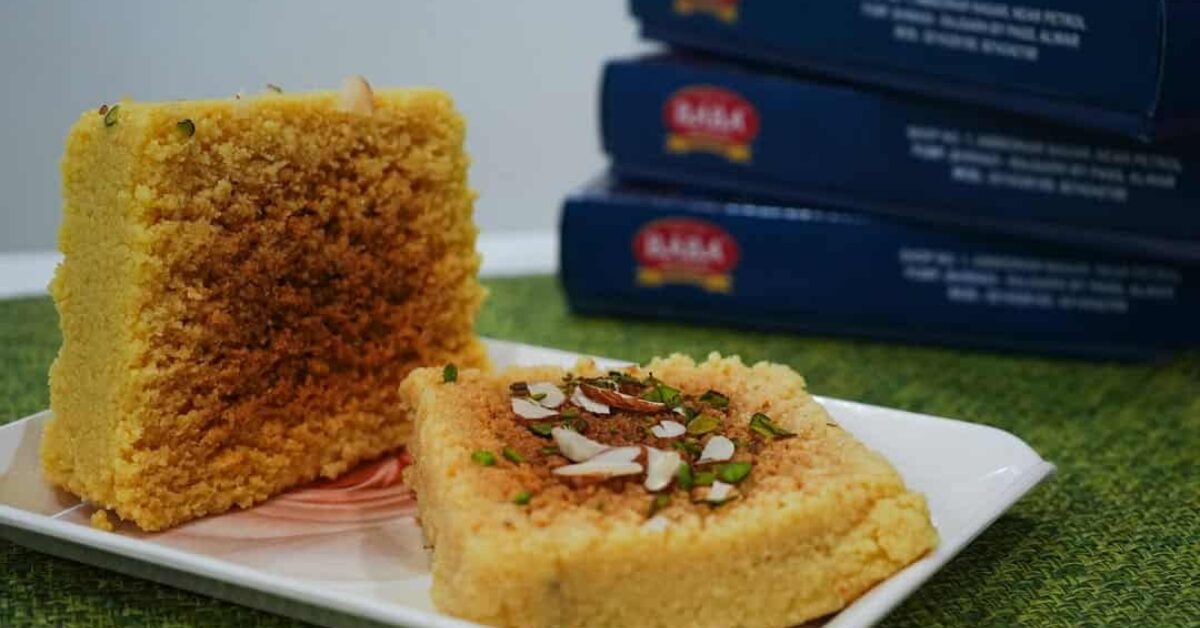
All sweet tooths would agree with the universal feeling of tasting Kalakand for the first time. A fluffy little piece that is almost delicate to hold feels even more delicate as it melts in your mouth, leaving the essence of ghee lingering hours after you take your first bite. It is a feeling that transports you to a place you yearn for, which you haven’t even discovered yet. Almost everyone who has experienced this sublime feeling would obviously not restrict themselves to a single piece, but alas, too many too quickly would absolutely ravage your dental bills. This is, in fact, a struggle that a lot of people can relate to.
As simple as the ingredients of Kalakand are, the goosebumps one gets after eating this kova hot and fresh-out-of-the-stove are anything but simple! It may burn your tongue for sure, but is still a bliss nevertheless. All it takes is full-fat milk, sugar, lemon juice, and, surprise, surprise, it is now a sweet. Thoughts and prayers if you are lactose intolerant. You don’t know what you are missing out on!
A History as Rich as Its Taste
So, to expand on the nostalgic feeling you might have encountered, did you ever wonder about the origin of this much-beloved delicacy that so effortlessly won you over for the rest of your life, with no questions asked, as you promised your undying loyalty to it as one of your favourites? Well, to satiate the geeky side of your brain, a 19th-century Urdu text, Zīnat al-ʿArūs, written by Mohammad Abdul Hamid and printed by Munshi Nawal Kishor in Kanpur, contains the earliest known written literary reference to Kalakand. The title, from Arabic and Urdu, translates to ‘The Adornment of the Bride’. This account stands as living proof of why documenting history and cultural practices is quite important.
Moving on from the literary references, another part of Kalakand’s history can be traced back to Partition. Yes, you read that right. A halwai named Baba Thakur Das, who used to reside in Dera Ismail Khan, a city in present-day Pakistan, migrated to India and settled in Alwar, Rajasthan. He is associated with the invention of the Kalakand that we so frequently enjoy. If you were to visit Rajasthan, do make sure to visit the shop of Baba Thakur ji, named Baba Thakur Das & Sons. There is also an area dedicated to Kalakand called Kalakand Market, locally known as Alwar ka Mawa, near Hope Circus and the city bus stand, dedicated to the city’s legendary sweet.
After reading all this history, if your mouth has begun to water, and if visiting Alwar, is a bit far-fetched right now, do visit the oldest sweet shops in our very own Vizag and treat yourselves to some milky-grainy-goodness lathered in ghee, either at Chandu Sweets or Siva Rama. What better time to gorge on this beauty than an occasion such as Independence Day, which eventually blessed us with the sweet’s existence?
Also read: New food places in Vizag: 7 restaurants, cafes, & cloud kitchens!
Stay tuned to Yo! Vizag website and Instagram for more food updates in the city.