
Now Reading: 5 oldest railway stations of India you can visit from Visakhapatnam!
-
01
5 oldest railway stations of India you can visit from Visakhapatnam!
5 oldest railway stations of India you can visit from Visakhapatnam!
The Indian Railways has always been a subject of fascination for history and rail enthusiasts. Its story is one whose tracks go back to the late 19th century when the British established and expanded a rail network across the country to ease transportation. 1853 saw the operation of India’s first train between Bombay and Thane, and Vizag itself entered the field in 1893. Since then, the Indian Railways has evolved into India’s largest daily transport system and one of the largest employers globally. Its enduring infrastructure, some of which date back over a century, continues to operate, offering both utility and nostalgia. Many of India’s oldest railway stations are ages-old architectural marvels, each carrying stories of their own. If you’re in Visakhapatnam and fascinated by railway heritage, here are five of the oldest railway stations in India that you can travel to:
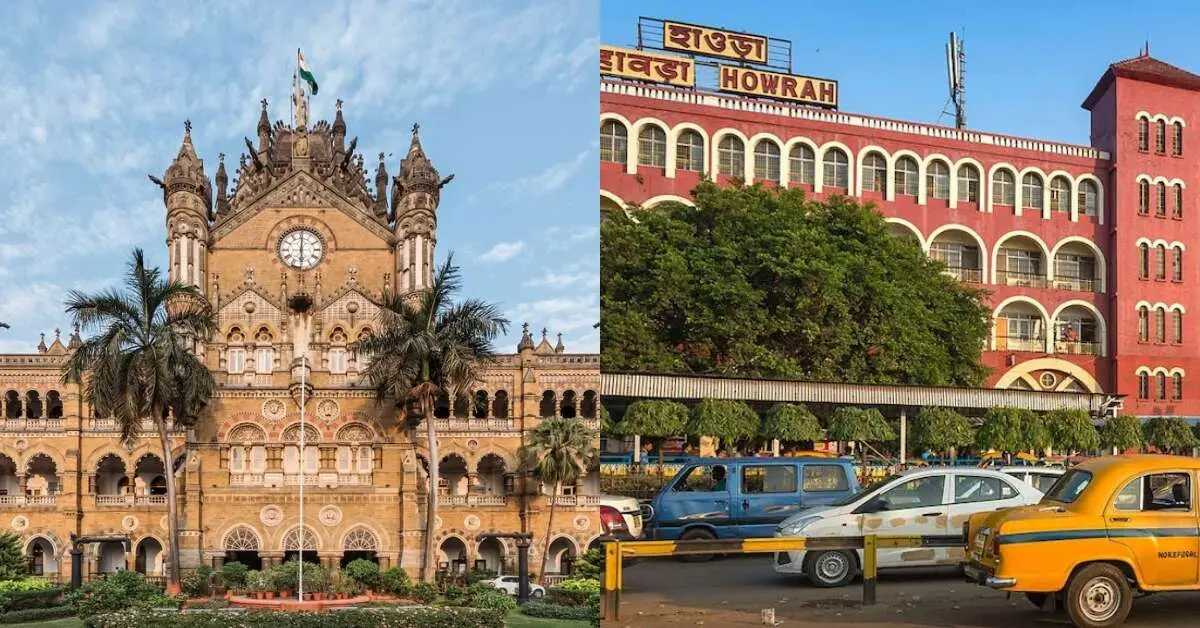
1. Chhatrapati Shivaji Maharaj Terminus

-
Reach via: 11020 Konark Express, 01056 Bhubaneswar–Mumbai CSMT Special (via Duvvada), 01050 Khurda Road–Mumbai CSMT Special (via Duvvada)
-
Station Code: CSMT / CSTM
-
Zone: Central Railway
Formerly known as Bori Bunder, this was the site from which India’s first train departed for Thane in 1853. Later rebuilt and renamed Victoria Terminus in 1887, it received its present name, Chhatrapati Shivaji Maharaj Terminus, in 2017. Designed by British architect F W Stevens, the station is a magnificent example of Indo-Saracenic architecture with High Victorian Gothic influences.
Its iconic stone dome, ornate turrets, pointed arches, and expansive floor plan make it a defining feature of Mumbai’s cityscape. Declared a UNESCO World Heritage Site in 2004, it is not only India’s oldest functioning railway station but also its most photographed.
2. Howrah Junction

-
Reach via: 12840 Howrah Mail, 12704 Falaknuma Express, 12864 SMVT–Howrah SF Express, 12840 MGR Chennai Central–Howrah Mail
-
Station Code: HWH
-
Zone: Eastern Railway
Established in 1852 and operational by 1854, Howrah Junction stands as one of the oldest and busiest railway stations of India. With 23 platforms, it handles approximately one million passengers and around 600 trains each day.
Designed by architect Halsey Ralph Richard, the structure boasts Romanesque architectural elements that are most notably seen in its imposing red brick arches and towers. As a key terminal for Eastern India, Howrah continues to hold significant historical value.
3. Virangana Lakshmibai Jhansi Junction

-
Reach via: 12803 Hazrat Nizamuddin Swarna Jayanti Express, 20806 Andhra Pradesh Express, 12807 Samata Express, 20807 Hirakund Express
-
Station Code: VGLB
-
Zone: North Central Railway
Originally built by the Great Indian Peninsular Railway in the late 1880s, this station, previously known as Jhansi Junction, was renamed in 2021 to honour Rani Lakshmibai. It served as the headquarters for the Indian Midland Railway and was critical in connecting northern and southern India.
The station’s fort-like architecture, painted in maroon and off-white, draws inspiration from the nearby Jhansi Fort and Rani Mahal. Today, it remains a vital node for both passenger and freight services and is notably the departure point for the high-speed Gatimaan Express.
4. Jaipur Junction Railway Station

-
Reach via: 18573 Bhagat Ki Kothi Weekly Express
-
Station Code: JP
-
Zone: North Western Railway
Constructed in 1875, Jaipur Junction is Rajasthan’s busiest railway station, handling over 45,000 passengers daily with more than 100 broad-gauge trains operating through it. The station sits at an elevation of 428 metres above sea level and is strategically located near major bus and metro terminals in the Pink City.
The current station building was inaugurated by Maharaja Sawai Man Singh II in 1956 and reflects the city’s heritage through its architecture, featuring lattice (jaali) work, domes, arches, and mirror craftsmanship.
5. Puducherry Railway Station

-
Reach via: 12867 Puducherry SF Express, 20851 Bhubaneswar–Puducherry SF Express, 12867 Howrah–Puducherry SF Express
-
Station Code: PDY
-
Zone: Southern Railway
Puducherry Railway Station is one of the few stations in India that encapsulate the dual legacy of French and British colonial rule. Built in 1879, the station originally formed part of a 12-km metre-gauge line connecting the French town of Pondicherry to British India via the Gingee River bridge.
The structure’s Greco-Roman columns and colonial charm continue to mesmerize visitors. Despite modern upgrades, the station retains much of its old-world appeal, making it a nostalgic stop for heritage lovers.
More than a mode of transport, India’s railway network has significant cultural value. As one of the oldest and most extensive rail systems in the world, it connects people, places, and stories. Experience its legacy at these oldest railway stations that can be accessed from Visakhapatnam!
Stay tuned to Yo! Vizag website and Instagram for more such articles.