Now Reading: Visakhapatnam’s Seafood Industry: The Backbone of India’s Booming Seafood Exports
- 01
Visakhapatnam’s Seafood Industry: The Backbone of India’s Booming Seafood Exports
Visakhapatnam’s Seafood Industry: The Backbone of India’s Booming Seafood Exports
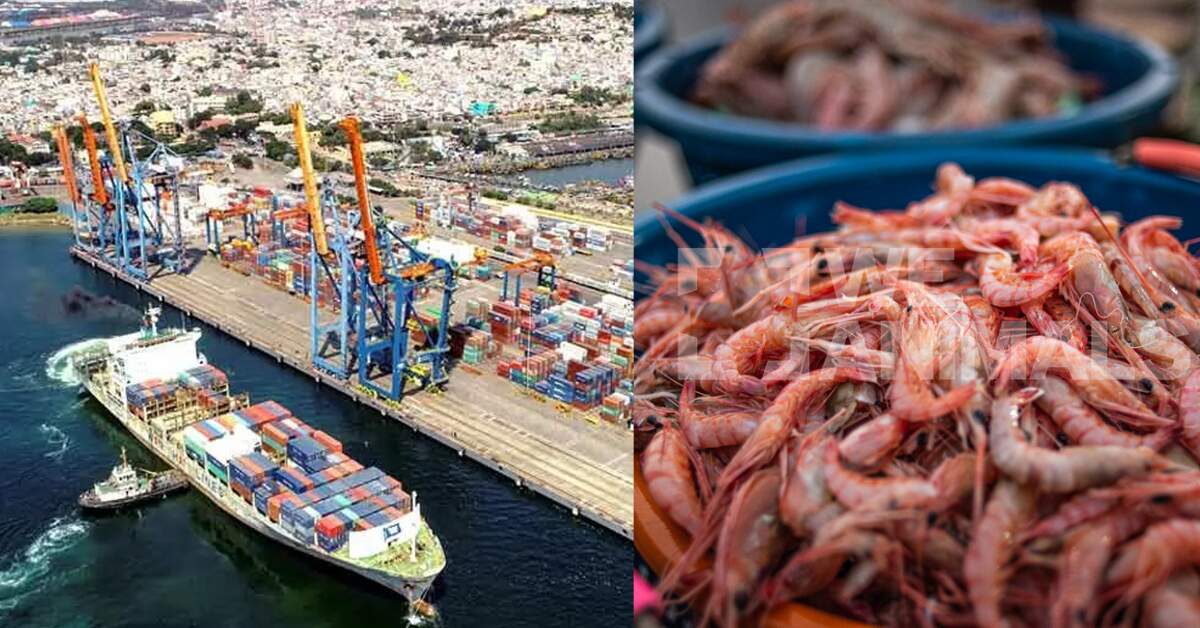
If you’ve ever walked past the bustling fishing harbour in Visakhapatnam, with the scent of salt and sea thick in the air, chances are you may not realise you’re standing at the core of India’s largest seafood economy. Contributing to over 24% of the country’s total seafood exports and a whopping 54% of the state’s marine exports, the seafood industry of Visakhapatnam has quietly become a lifeline of a thriving global trade network.
But how did this coastal city evolve into such a marine powerhouse? Let’s take a brief look at the history, rise, and economic scale of an industry that not only drives Visakhapatnam’s economy but also plays a defining role in India’s global seafood presence.
The transformation began in 1976, when the Visakhapatnam Fishing Harbour was officially commissioned. Spread across 64 acres, the harbour was built at a cost of approximately Rs 4 crores and could support 700 mechanised boats and 300 traditional craft, laying the groundwork for what would become a multi-crore marine economy.
In its early years, the harbour served largely local economies. From dawn’s first light, hundreds of wooden boats returned from offshore fishing with catches of ribbonfish, sardines, mackerel, cuttlefish, tuna, and carangids, sold primarily for markets in Andhra Pradesh, Tamil Nadu, and Karnataka.
The Shrimp Boom
In 2009, when Vannamei (Whiteleg) shrimp farming was officially approved in India and Andhra Pradesh, districts like Nellore, Guntur, Krishna, and Visakhapatnam quickly became major hubs of aquaculture growth. Due to Vizag’s port connectivity, today, the state contributes around 65-70% of India’s shrimp production, much of which is processed through units based in and around the city.
Visakhapatnam’s processing infrastructure has scaled up significantly. Andhra Pradesh hosts 102 shrimp processing plants, with 21 units located in Visakhapatnam and its nearby regions. These are situated close to the port for quicker cold-chain logistics. Supporting them are 15 shrimp hatcheries, 25 cold storages, and 18 ice plants within the district, enabling fast, hygienic, and export-ready supply chains.
By 2021-22, shrimp exports via Visakhapatnam Port touched 2.45 lakh metric tonnes, making up 33% of India’s total shrimp exports (approximately 7.28 lakh MT) and 82% of Andhra Pradesh’s exports (approximately 3 lakh MT). In value terms, Vizag’s shrimp exports were worth nearly US $2 billion, compared to US $5.8 billion in total Indian shrimp export earnings that year.
And in FY 2022-23, Visakhapatnam Port handled 2.64 lakh tonnes of seafood valued at Rs 16,877 crore, which accounted for 26.36% of India’s total marine exports. Nationally, India exported 17.35 lakh MT of seafood worth Rs 63,969 crore (approxiately US $8.09 billion), with frozen shrimp contributing 41% by volume and 68% by export value.
The momentum continued in FY 2023-24, as Vizag Port shipped 3.14 lakh tonnes of seafood worth Rs 17,983 crore (approximately US $2.19 billion), representing nearly 30% of India’s seafood exports. Andhra Pradesh’s contribution by value was around 32%, and India exported 7.16 lakh MT of frozen shrimp, which accounted for 66% of total seafood export revenue.
This massive growth was capitalized on by many Visakhapatnam-based companies, including Apex Frozen Foods, Avanti Feeds, Devi Seafoods, Sandhya Marines, Nekkanti Sea Foods, and many more. These companies played a pivotal role in processing, cold-chain logistics, hatchery management, and global trade, exporting primarily to the United States, Europe, China, and Southeast Asia.
While shrimp remains the dominant export item from Visakhapatnam, the city also handles an important, though smaller-scale, trade in other seafood products like dry fish, cuttlefish, squid, tuna, and mackerel. The dried fish sector is largely run by traditional fishers in Visakhapatnam and its neighbouring districts.
According to the official Visakhapatnam district portal, the region includes a designated dry-fish yard at Thimmapuram (near Bheemili), forming a coastal infrastructure built for high-volume fisheries and seafood trade. Many fish-based products, made of ribbonfish, sardines, croaker, and lizardfish, are exported to markets in Sri Lanka, Singapore, Malaysia, and across South Asia and the Middle East.
Present Scenario
The seafood industry in Visakhapatnam now finds itself navigating rocky international waters, as abrupt tariff changes have created new headwinds. In early 2025, the United States, which implemented a 25% reciprocal tariff on Indian shrimp, along with additional 2.49% anti‑dumping duties and 5.77% countervailing duties, pushed effective tariffs to around 34%, significantly higher than competitor countries like Ecuador, which faces just around 13-14% tariffs.
This sudden cost escalation has disturbed both exporters and suppliers. Spot prices for high-demand Vannamei shrimp varieties dropped by 10-15%, impacting farmers and producers across Andhra Pradesh. The Seafood Exporters Association of India estimates initial losses could soar to around Rs 600 crore, with thousands of containers stuck in transit at U.S. ports and export orders postponed or cancelled.
In response, the Government of Andhra Pradesh swiftly formed a task force to study the impact of these tariffs and propose mitigation strategies such as diversifying export destinations, negotiating exemptions, and exploring domestic consumption campaigns. Meanwhile, leading exporters have begun shifting focus toward alternate markets, including China, Russia, Canada, and Europe, to reduce reliance on the U.S. market.
Despite recent turbulence, the backbone of the seafood industry in Visakhapatnam remains resilient. The robust cold-chain networks, processing units, hatcheries, and port logistics that once powered its ascent are now driving its ability to adapt, enabling exporters to pivot swiftly, innovate product lines, and uphold India’s stature in the global seafood market. Follow Yo! Vizag website and its Instagram for more interesting content on Vizag.