
Now Reading: Rise and Fall of Buddhism in Vizag: Tracing the Forgotten Heritage of Buddhist History
- 01
Rise and Fall of Buddhism in Vizag: Tracing the Forgotten Heritage of Buddhist History
Rise and Fall of Buddhism in Vizag: Tracing the Forgotten Heritage of Buddhist History
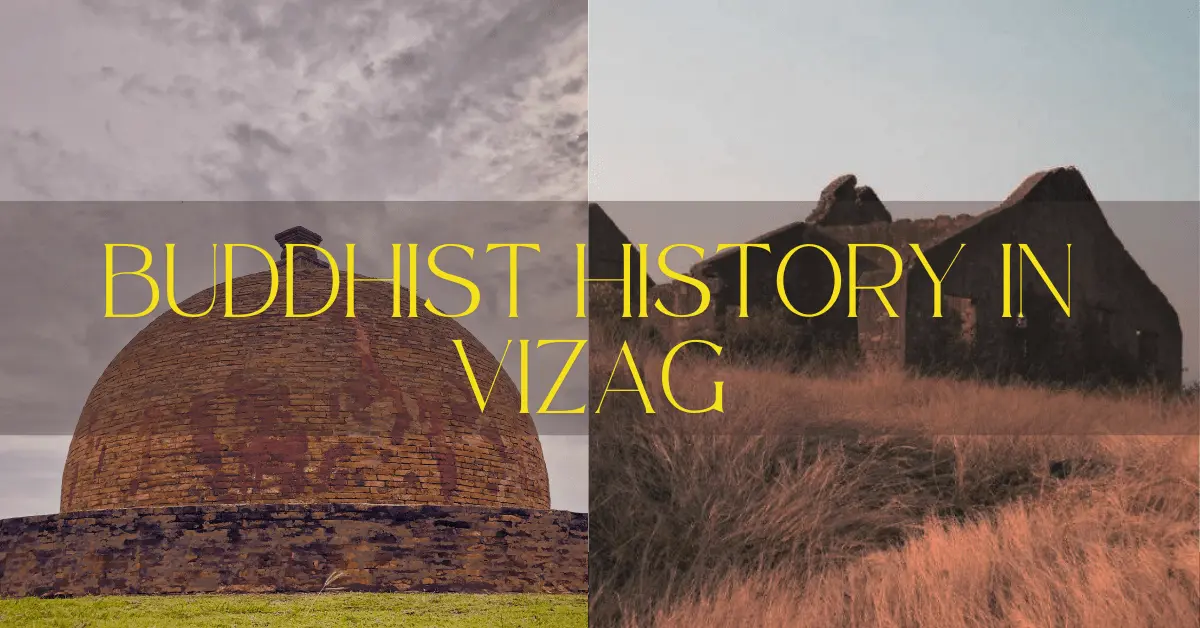
Today, Visakhapatnam is known as one of India’s largest port cities, a hub of industry, shipping, and urban growth along the Bay of Bengal. But long before it became “Vizag,” or even “Visakhapatnam” this coast was famed for very different reasons. The hills that now overlook steel plants and harbours once once had a history that echoed with chants of monk, and was a flourished blooming centre of Buddhist learning and devotion.
From Bavikonda to Thotlakonda the relics of Buddhist heritage era still dot the landscape of Vizag, and we all know the places and may even have visited a couple, but question arises on how did all of this start? Why are these Buddhist sites built in Vizag in the first place? and How did it all come to an end? ; If these are questions you’re curious about, then this article is for you, as we journey through the unforgettable past, tracing the rise and decline of Buddhism in coastal Andhra and Vizag.
The Rise: How Buddhism reached Vizag
The origins of Buddhist history in Andhra and coastal Odisha dates back to the 3rd century after the Mauryan emperor Ashoka won over the Kalinga Empire. The Mauryan empire under Ashoka The Great was one of the most prominent empires to support Buddhism and are often credited for bringing the initial wave of Buddhism to South India, and the wave got even stronger after the Satvahana Dynasty took control of the South after the Mauryan decline.
The Zenith: Hay days of Buddhism in Vizag
Between roughly the 3rd century BCE and the 4th century CE, South India entered its high phase, a period when Buddhism in coastal Andhra was not merely present, but visibly prosperous. This was the century when the great hill-top monasteries and stupas that we visit today were built. This was the period when places like Kanchipuram, Amaravathi and others became a dominant hub of Buddhist culture.
Few of the most popular Buddhist remains in and around Visakhapatnam include,
- Thotlakonda which was built between the 2nd century BCE and 2nd century CE, with stupas, viharas and Chaityas supporting a large monastic community near the present day Bheemunipatnam (Bheemili).
- Bavikonda, dating from the 3rd century BCE. Ingenious rock-cut reservoirs sustained the monks, while relic caskets and stupas reflected the profound ritual life of the sangha.
- Pavurallakonda, active between the 3rd century BCE and 2nd century CE, was among the largest monasteries in the region, marked by extensive viharas, chaityas and inscriptions that highlight its role as a centre of learning and devotion.
- At Bojjannakonda and Lingalakonda, Buddhism flourished from the 2nd to the 9th century CE, evolving from the Hinayana to the Mahayana and Vajrayana traditions. Their rock-cut caves, stupas, and sculptures stand as enduring testaments to centuries of artistic and spiritual development.
- Kotturu Dhanadibbalu, built between the 1st century BCE and 2nd century CE, preserved a Maha stupa and cave shelters along the Sarada River, a smaller but significant link in the chain of monasteries.
Most of these Buddhist heritage places in and around Vizag served as sacred and spiritual centres to conduct many ritualistic practices followed by the Buddhist Sanghas.
The Decline: Leaving the Perpetual Heritage
By the 7th century CE, the great Buddhist centres of coastal Andhra, including those around Vizag, had begun to fade. The decline was not sudden, but the result of many interwoven changes across India. One of the most significant changes was the loss of royal patronage. After the Mauryan Emperor Ashoka and later the Satavahanas, very few dynasties actively supported Buddhism. Without the backing of rulers, monasteries that had once thrived on generous endowments and donations struggled to sustain their large communities.
At the same time, Hinduism experienced a revival in South India. The Bhakti movement, with its emphasis on personal devotion to Shiva and Vishnu, resonated deeply with local communities. Temples began to replace monasteries as centres of worship and patronage. This religious shift gradually absorbed Buddhist practices and followers, leaving many sanghas abandoned.
Another factor was the rise of internal divisions within Buddhism itself. As sects like Mahayana and Vajrayana developed, the simple teachings of early Buddhism became layered with complex rituals, images and esoteric practices. While these enriched the religion’s philosophy, they also distanced it from the common people who once found solace in its straightforward path of liberation.
By the 12th century CE, most monasteries in South India, including those in Vizag, lay deserted, leaving behind only the memory of a once-thriving Buddhist heritage. At sites like Bavikonda and Thotlakonda, stupas crumbled and relics lay buried beneath layers of earth and grass.
Today, the ruins on these hilltops stand as reminders of a time when Vizag was part of one of the world’s great spiritual networks. The rise and fall of Buddhism here mirrors its journey across India, a story of flourishing under royal and popular support, followed by decline amid shifting political, cultural, and religious tides. Yet in their quiet endurance, these monuments continue to tell the tale of a faith that once shaped the very soul of coastal Andhra.
Also read: From Vizag to France: Exploring Former French Colonies in India
Stay tuned to the Yo! Vizag website and Instagram for more travel recommendations.