
Now Reading: Bucket hats, chants and unconditional love: An exclusive interview with the Bucket Hat Club
-
01
Bucket hats, chants and unconditional love: An exclusive interview with the Bucket Hat Club
Bucket hats, chants and unconditional love: An exclusive interview with the Bucket Hat Club
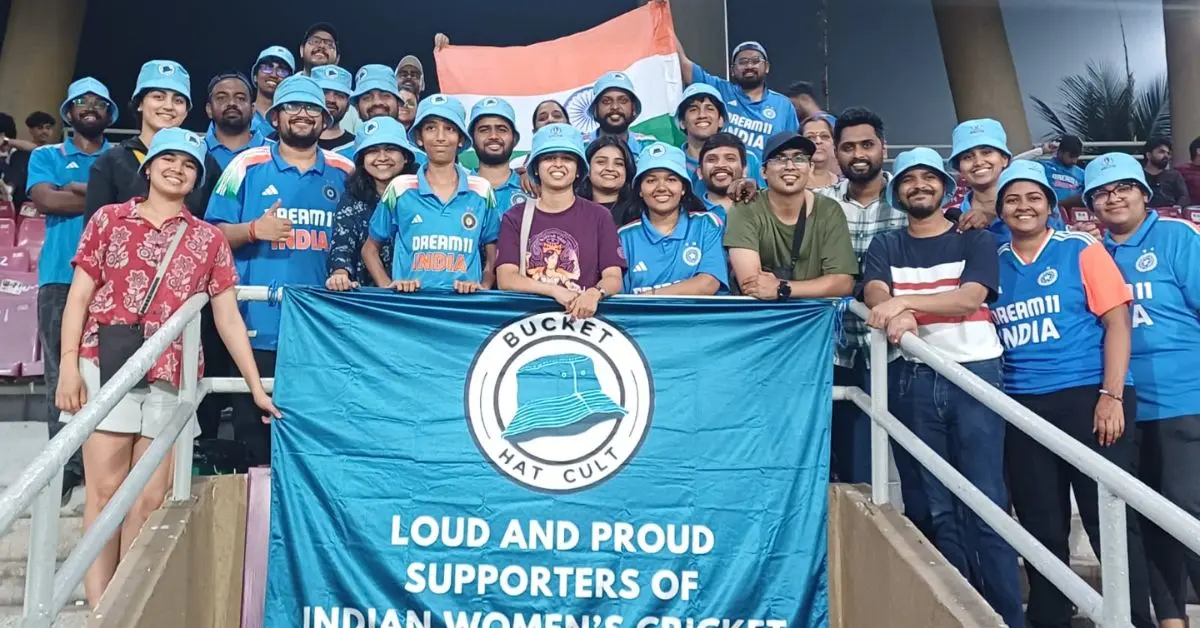
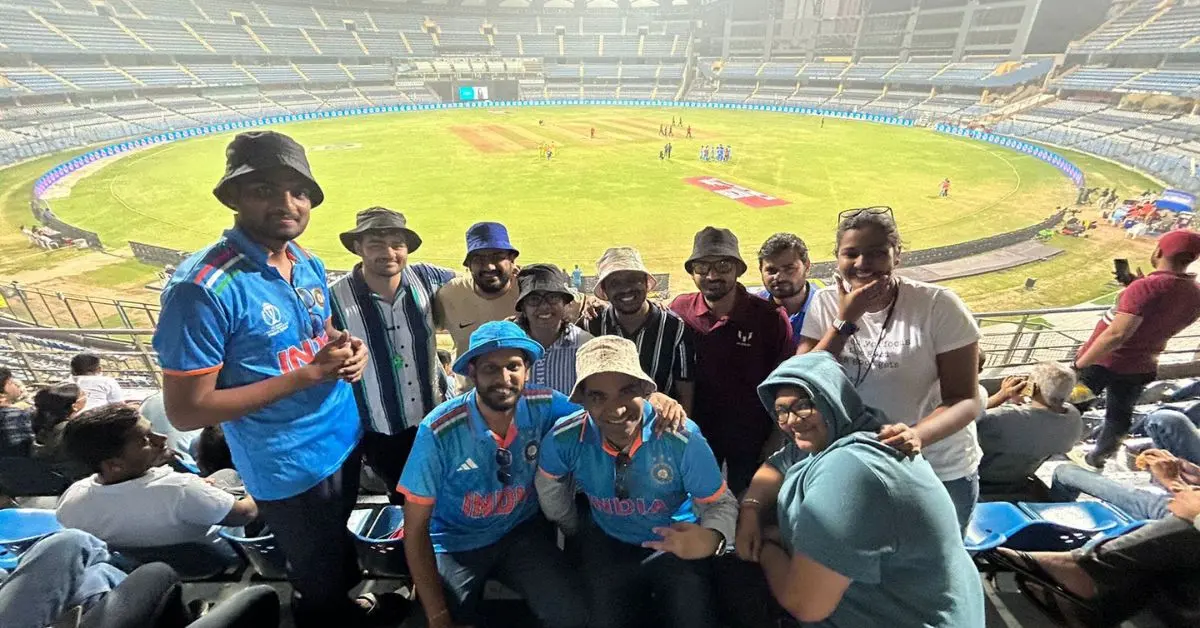
In 2023, during the Women’s Test Matches in Mumbai, a group of fans unknowingly formed a pattern, something which did not start with a plan or name. A group of bucket hat-clad fans who had been supporting the Women’s cricket team for a very long time found themselves sitting close to people who were just as invested and genuinely cared deeply for the cricket team. This gave birth to The Bucket Hat Cult, an energetic grassroots fan group, known for supporting Women’s cricket and advocating for them. The group has earned a name for their energetic stadium presence, unique chants and creating an inclusive environment.
Yo! Vizag had the opportunity to sit down for a conversation with Radha Gupta, one of the founding members of the Bucket Hat Cult, who walked us through the unplanned formation, motto and future hopes of the group.
The Unplanned Beginning
Radha shares that during Test matches in Mumbai, the group, who happened to be wearing bucket hats by chance, noticed something impossible to ignore: a huge disparity in crowd backing. The encouragement the Women’s team received was nowhere near the level of enthusiasm shown for the Men’s team. So, the group decided to fill that gap by simply being there, being loud, chanting, singing, and consistently supporting the team. The group instinctively made a collective choice to be loud, visible and make the team feel loved and supported.
From Strangers To A Collective Voice
Over time, the group evolved organically, as they recognised the reality that while adding a large number of fans to the Men’s cricket match might not make a significant difference, adding even a small number of fans to the Women’s cricket matches would have a massive impact. Radha recalls matches where only one stand would be open because tickets for women’s cricket games were neither properly marketed nor widely sold, leaving many unaware of where to find them. Even a small number of people cheering for the team meant a lot to them.
The Bucket Hat Cult is the by-product of a group of people who came together and realised that this could be something bigger, ensuring that the team always felt appreciated and never felt empty or overlooked.
A Chance Accessory That Became An Identity
When asked why the group chose the bucket hat and named it after it, Radha shared that it was honestly something unplanned and out of necessity. Most of the members were wearing bucket hats due to practical reasons, as cricket matches are long and the sun is unforgiving.
But after India won the Test, an unexpected moment gave the hats a new meaning.
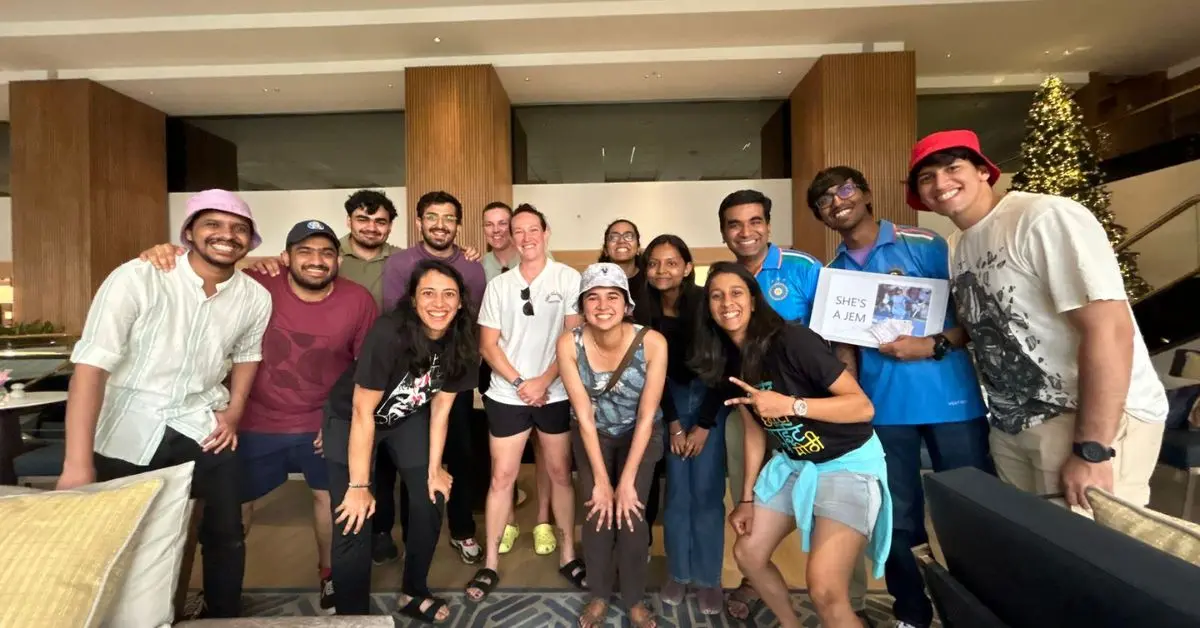
Through a journalist friend, the group met Jemimah Rodrigues and Smriti Mandhana in the hotel where the team was lodged. During the interaction, the cricketers said, “You are the ones with the bucket hats in the stands, right?”
This recognition came to define the group’s identity. They realised that the players didn’t just notice the cheering, they remembered their group. From then on, the bucket hats became their identity. It is how the players spot the group in the stands, and fellow community members identify each other in the crowd if someone is late. “Naming ourselves Bucket Hat Cult was spontaneous, but meaningful,” Radha said.
Most Memorable Moment!
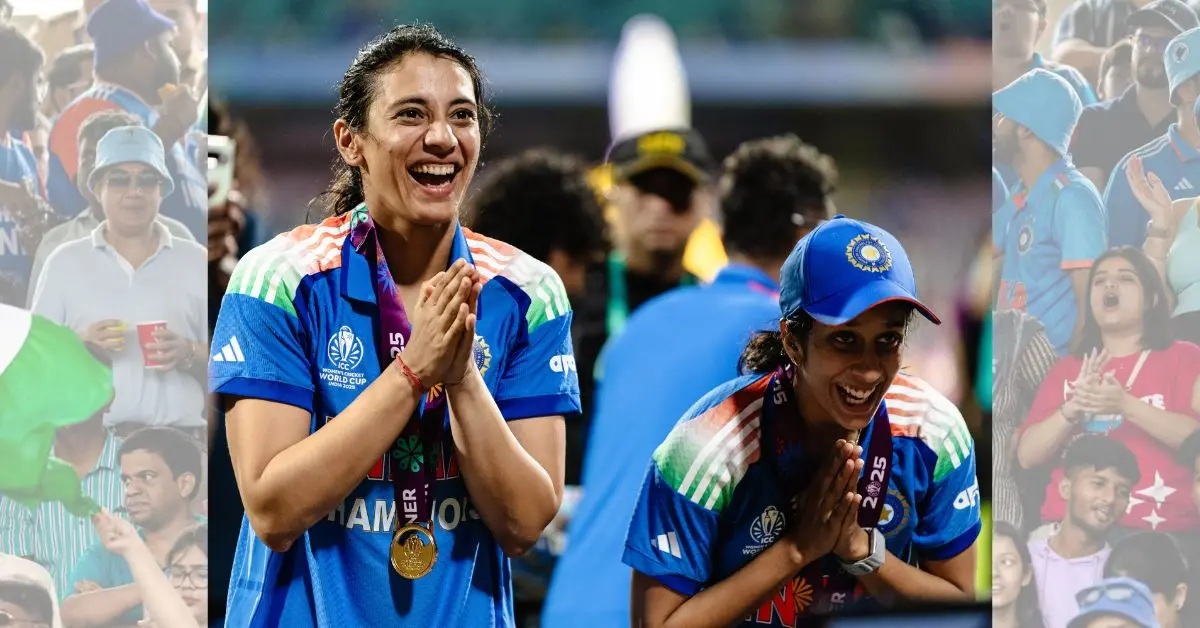
Upon being asked about a moment or interaction that stayed with the Bucket Hat cult, Radha said, “Honestly, all the players, including coach Amol Muzumdar, are very responsive to us. We’re in the stands before the first ball is bowled, chanting, singing, dancing, waving. Players wave back, dance along, acknowledge us. Another unforgettable moment was after India won the World Cup. Smriti and Jemimah came beneath our stand with their medals, pointed at us, and thanked us. Jemimah even went back inside, brought out a bucket hat we had given her earlier, wore it, bowed, did a namaste, and blew us a flying kiss. That moment meant everything,” Radha reminisced.
The Philosophy
At its core, the Bucket Hat Cult’s philosophy is simple- if you are an Indian who loves cricket, you must support both the men’s and Women’s teams. Historically, Women’s teams have been underfunded, under-marketed and treated as an afterthought, making fans feel powerless as individuals. But collective voices amplify. When 200 people raise questions about ticketing issues, marketing and other facilities, they begin to matter.
Challenges and Barriers
While speaking about the challenges faced by the community, Radha said there are no challenges from the community. People want to join. People love sports and want to support and watch women playing sports. “Community-wise, not many. The real challenges are logistics and administration. Often, people are unaware of a match happening in their city. Sometimes they are unaware of where to buy tickets. Other times, the matches are scheduled on weekdays. There is little to no branding, no billboards, no ads. If locals don’t even know a match is happening, how do you fill the stadium? That’s been the biggest hurdle,” she explained.
Why Fan Energy Hits Different in Women’s Cricket Matches
During our discussion on fan energy, the member pointed out that fan energy also plays a different role in cricket. Men’s cricket has already reached its peak. Adding even 100 more fans will not make a difference, but adding 100 or 500 more fans to a womens cricket match would make a huge difference.
Challenges the Indian Women’s Cricket Team faces
We further explored the factors holding the team back. Radha noted that branding and marketing are the biggest shortcomings, and that, in the lead-up to the World Cup, meaningful backing only arrives after a win. Yet, clinching the World Cup with limited resources has given fans renewed hope.
Social Media Presence
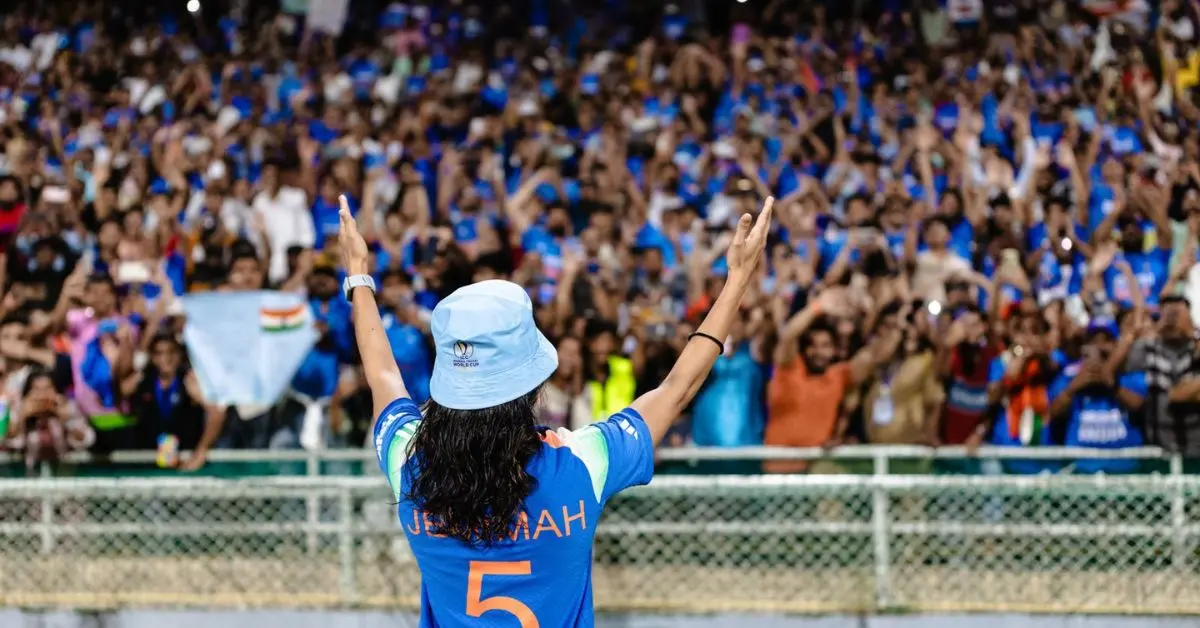
The Bucket Hat Club’s social media has amplified its presence. While garnering a huge number of followers was not the intent, the community grew organically. For two years, the group had about 400 followers. Post the World Cup, and after players like Smriti Mandhana and Jemimah interacted, the handle garnered a decent number of followers, and their credibility grew.
Moment of Recognition
The World Cup captures the spirit of the cult best, the group stage match with New Zealand, the semi-final against Australia and the finals, during which the group received messages from fans who wanted to join the community. The members had to procure 50-60 hats. “Before the semi-final, people kept messaging asking where to get bucket hats. We arranged 50–60 hats. There were nearly 80–90 of us in one stand, singing, dancing, and being loud,” Radha stated.
“Many of us had already bought final tickets before they sold out. Those three matches captured everything Bucket Hat Cult stands for: momentum, organic growth, and meaningful player acknowledgement.”
Evolution Of The Crowd
Over time, attendance has improved, but so has awareness. “Yes. Turnouts have increased, but more importantly, the knowledge base of fans has improved. Unlike before, people now know player statistics, and also about opposition, just like men’s cricket fandom,” Radha said.
Future Goals?
The future of Bucket Hat Cult isn’t about expansion; it is about presence. They want support to follow the Women’s team wherever they go, be it the original team or like-minded fans in other cities. All that matters is cheering loudly and making the team feel loved and supported.
How To Join The Cult?
Joining the Bucket Hat Cult is simple: follow their Instagram handle, join their WhatsApp community, and there is no entry barrier. Their only expectation is for fans to be respectful, non-racist, and behave like good fans in the stadium.
For the Bucket Hat Cult, supporting the Women’s cricket team is deeply personal.
“I grew up playing sports but never watching women play on TV. I didn’t even know India had a Women’s team until much later. Supporting Women’s cricket helps create role models. It tells parents that cricket is a viable career for their daughters. It tells boys that girls belong on the field too. It may feel like a drop in the ocean, but we hope it creates ripples that make Women’s cricket a household name in India,” Radha said, closing the interview on a deep and thought-evoking note.
Also read: From Vizag: Dive into the Journey of Rohit Vijjapu from Vizag and his artistic tribute to the city!
Stay tuned to Yo! Vizag website and Instagram for more such articles.