

Now Reading: Explore Andhra Pradesh: Don’t Miss These 7 Stunning Places When You Visit Amaravati
-
01
Explore Andhra Pradesh: Don’t Miss These 7 Stunning Places When You Visit Amaravati
Explore Andhra Pradesh: Don’t Miss These 7 Stunning Places When You Visit Amaravati
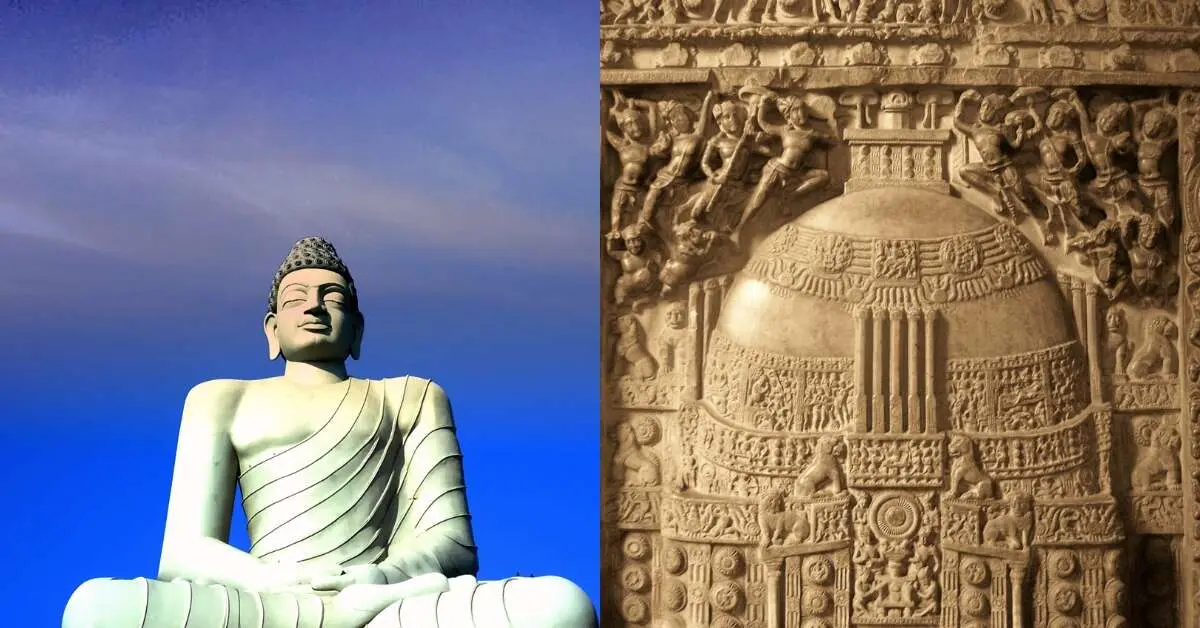
Amaravati, the legislative capital of bifurcated Andhra Pradesh, is a city steeped in history. With a heritage stretching back over 2,300 years, it once served as the eastern capital of the Satavahana dynasty and emerged as a major centre of Buddhist learning and culture. This ancient town, known as Dhanyakataka in earlier times, has witnessed the influence of powerful empires, spiritual movements, and modern political shifts, making it a compelling destination for travellers.
About Amaravati
Amaravati’s historical prominence began around 225 BCE under the Satavahanas, who ruled much of the Deccan. While the western capital was Pratisthana (now Paithan), Amaravati served as their eastern stronghold. During the Mauryan era, it remained culturally important despite being on the periphery of the empire. Buddhist traditions suggest that Gautama Buddha himself visited this area and preached here, lending spiritual weight to its legacy.
A key figure in reviving Amaravati’s urban identity was Venkatadri Naidu, an 18th-century zamindar who, disenchanted with British colonial rule, left his seat at Chintapalli and established a new town and palace at Amaravati. His efforts marked the transition of Amaravati into a modern settlement while preserving its ancient roots.
Today, Amaravati is not only significant politically but also a noteworthy travel destination with its heritage sites, temples, museums, and accessible infrastructure.
Places to Visit in and around Amaravati
1. Amareswara Temple (Amaralingeswara Swamy Temple)
Situated on the banks of the Krishna River, this sacred temple is dedicated to Lord Shiva. A 15-foot tall white marble Shiva Lingam stands as its focal point, enclosed in a stunning structure built in the Dravidian architectural style.
This temple is one of the five Pancharama Kshetras and is deeply embedded in Hindu mythology. For those interested in spiritual tourism, it is among the top pilgrimage spots in Amaravati.
2. Amaravati Mahachaitya (Amaravati Stupa)
On the southern bank of the Krishna River lies the Amaravati Mahachaitya, an ancient Buddhist stupa built in phases from the 3rd century BCE to the 3rd century CE, under the patronage of the Satavahanas and later the Ikshvakus. The stupa was rediscovered by Colin Mackenzie, the first Surveyor General of India, in 1797.
What remains today are ruins of a once-magnificent structure, adorned with exquisitely carved limestone panels that illustrate the life of Buddha, Jataka tales, and other Buddhist iconography. This site continues to draw scholars and spiritual seekers from around the world.
3. Amaravati Heritage Centre & Museum
Located on Guntur–Amaravathi Road, this two-storey museum was inaugurated by His Holiness the Dalai Lama in 2006 during the Kalachakra Maha Sammelan. It serves as a gateway into the region’s deep Buddhist heritage.
The museum houses an extensive collection of relics, including sculptures, pottery, coins, inscriptions, and religious artefacts unearthed during archaeological excavations. Particularly striking are the intricately carved Buddhist statues and narrative reliefs that reflect both spiritual themes and regional craftsmanship.
4. Dhyana Buddha Statue
This massive 125-feet (38-metre) seated Buddha statue occupies a 4.5-acre complex along the Krishna River. Commissioned in 2003 and completed in 2015, it marks the site where the Dalai Lama addressed the public in 2006. The statue’s hollow base contains panels that depict various teachings of Buddha, creating a tranquil space for meditation and learning.
5. Undavalli Caves
Approximately 11 km from Amaravati, the Undavalli Caves are a stunning example of monolithic Indian rock-cut architecture. Initially carved as Jain abodes in the 4th-5th century CE, the caves were later adapted for Buddhist and Hindu worship, showcasing a unique blend of religious art and architecture.
Constructed in the Gupta style, the caves feature sculptural contributions from the Vishnukundina dynasty (circa 420–620 CE), with some chambers containing reclining Vishnu statues and intricate carvings.
6. Prakasam Barrage
Located 12 km from Amaravati near Vijayawada, the Prakasam Barrage is not only a vital irrigation structure but also a picturesque tourist attraction.
Completed in 1958 and named after Andhra Pradesh’s first Chief Minister, Tanguturi Prakasam, the barrage spans 1,849 metres across the Krishna River with 45 crest gates.
It supports irrigation, drinking water supply, and power generation, while also offering scenic views, boating activities, and a riverside park ideal for picnics.
7. Bhavani Island
Just 17 km from Amaravati, Bhavani Island is the largest river island in Andhra Pradesh. Nestled within the Krishna River, it is a peaceful escape that’s perfect for nature lovers and families. The island is home to diverse bird species and offers a range of leisure activities such as guided nature walks, boating, fishing, and water sports.
Amaravati, in Andhra Pradesh, is a city that offers a variety of experiences for travellers. Whether you’re a pilgrim tracing the footsteps of Buddha, a history buff exploring archaeological wonders, or a leisure seeker enjoying the beauty of the Krishna River, Amaravati welcomes you with its layered heritage.
Stay tuned to Yo! Vizag website and Instagram for more travel recommendations.