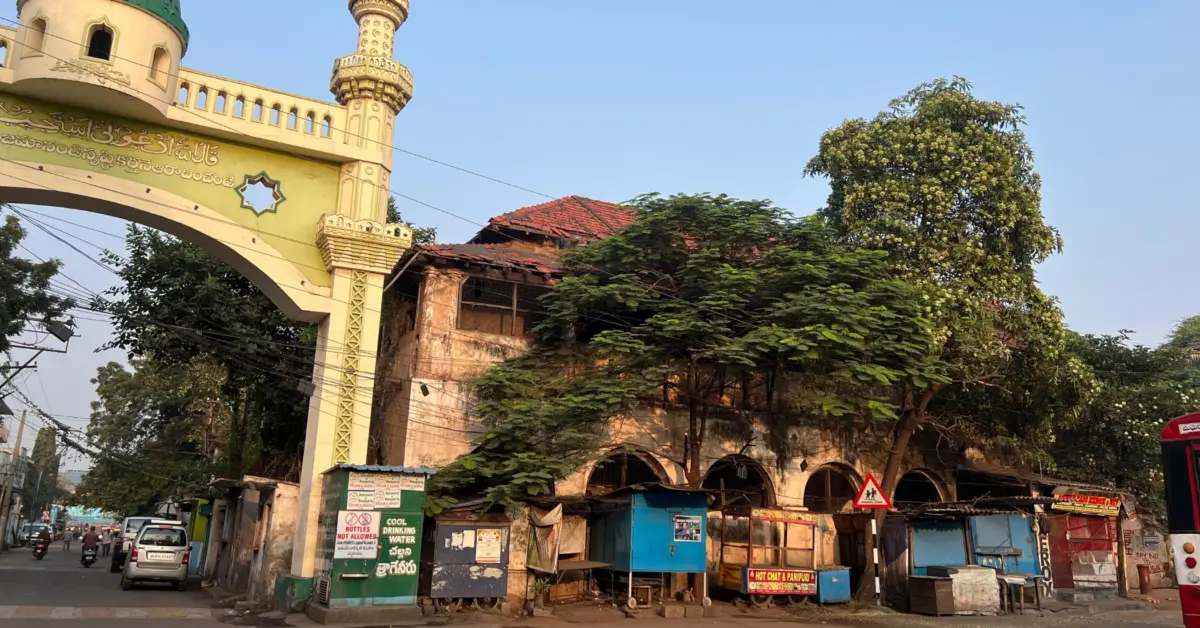
Now Reading: Historic St John’s Church in Vizag
- 01
Historic St John’s Church in Vizag
Historic St John’s Church in Vizag
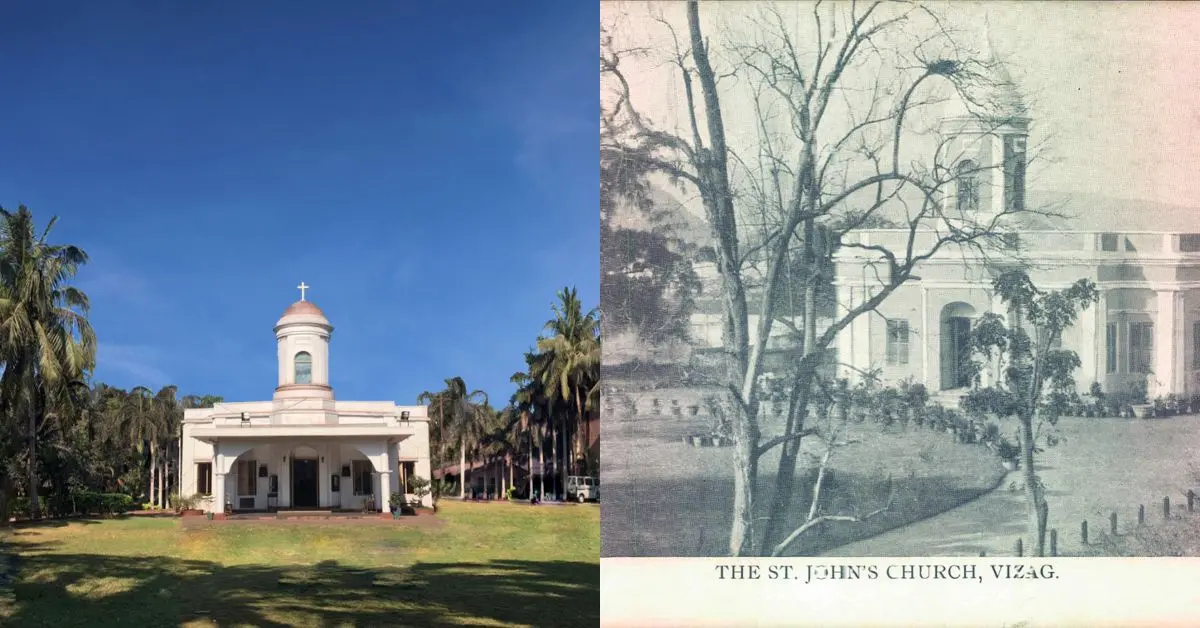
The town of Vizagapatam has a history in colonial India as old as Fort St. George in Madras (Chennai). In the 1600s, there was trade between Indian and English merchants, but a factory was not established in Vizag until 1682 in an agreement with the King of Golcondah (Golconda). This grant was unsettled because of the opposition from Dutch merchants in Bimlipatam, but from 1690 to 1757, there was stable trade by English merchants of the East India Company (EIC). A Chief and a Council governed the Vizag Factory. It consisted of dwelling houses, offices, godowns and a Council House bound by the crumbling remains of the old Fort Vizagapatam walls. In the Council House, the EIC Factors (merchants) met for meals, discussions, served as a court, and held divine services. The first Christian Protestant worship was on this site in the early 1700s.
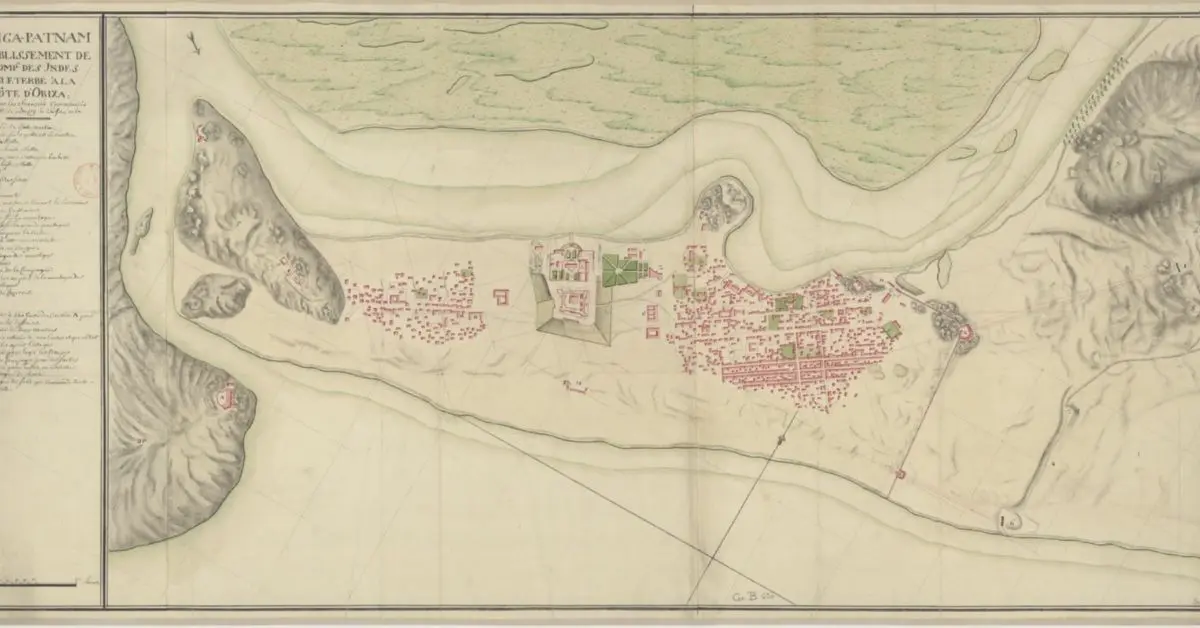
Vizigapatnam, établissement de la Compagnie des Indes d’Angleterre à la côte d’Orixa pris par les Français, commandés par M. de Bussy, le 26 juin 1757
The location of the Council House is illustrated in a scaled French military map of 1757 and is in a compound that is today St John’s Church in historic old town Vizag. The EIC’s celebrated architect, Peter Harrison, designed the original Vizag Council House in about 1750. Born in Yorkshire, England, in 1716, he lived at Newport, Rhode Island, from about 1745 until his death. He became the greatest American architect, with about 450 buildings to his credit, and was the first architect to design buildings on every known continent, but is little known today because most of his papers were destroyed during the American Revolutionary War. The British East India Company had benefited enormously from Harrison’s designs, as it commissioned him to design important buildings at Saint Helena; at Bombay (Mumbai), Surat, Cuddalore, Madras (Chennai), Vizagapatam (Visakhapatnam), Calcutta (Kolkata), and Patna in India; and in Java. The best remaining examples are the Government buildings within Fort St. George in Madras.
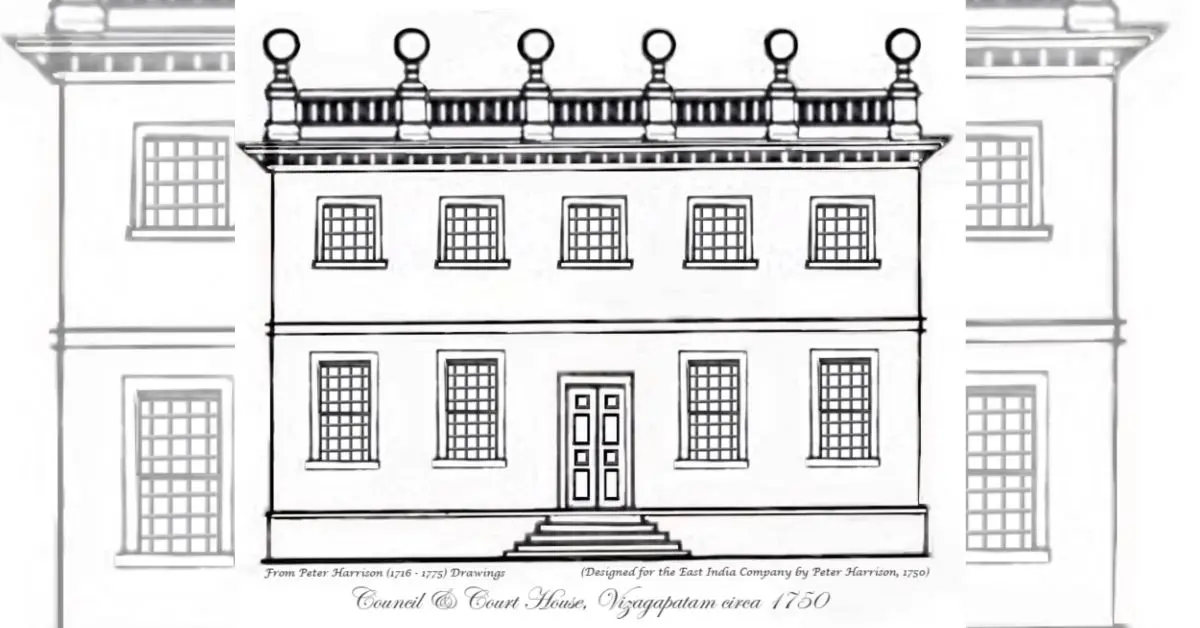
Council & Court House, Vizagapatam c 1750
By the early 1800s, the Council House had suffered from severe cyclone damage and poor maintenance. The Military Officer commanding Fort Vizagapatam was under EIC orders to build a church for the garrison soldiers and for the European and Eurasian population of the town. In Soldierpet, a small place of worship was to become a military and civil hospital, and alternative sites were considered. As the old Council House was uneconomical to repair, and after six years of delay, the church was finally built on the current picturesque site in 1845- 46. Measuring 87 x 48 x 21 feet, the church could seat 250 people, and the building and furnishing cost Rs 9,000. Major Arthur Cotton, a renowned engineer in the Madras Army, designed the church. He is credited with saving the old town of Vizag by designing and constructing the groynes along the Beach Road, and he also led the design and construction of the Godavari irrigation scheme. The church was consecrated by Bishop Spencer on December 27, 1846, and was named in honour of St John the Evangelist. The church was enclosed with a compound wall in 1875.
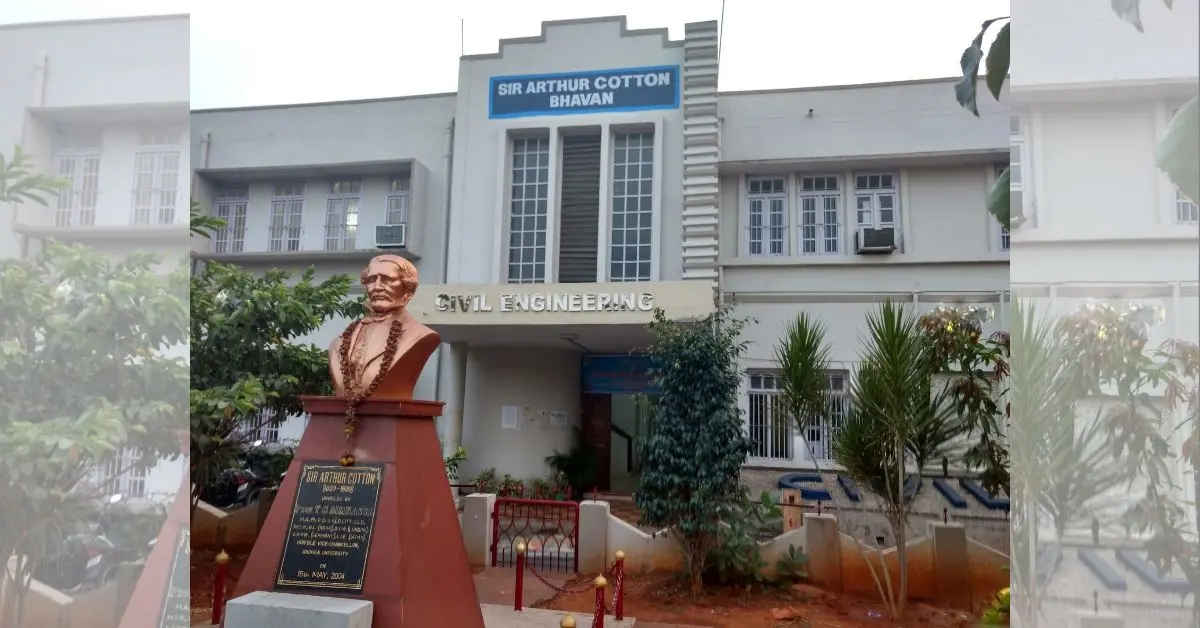
Memorial Bust of Sir Arthur Cotton,
Faculty of Civil Engineering, Andhra University
Sir Arthur Cotton’s contribution to engineering and to Vizag is recognised with a memorial to him at the entrance of the Civil Engineering Faculty at Andhra University.
The overall setting of St John’s Church in Vizag has an aesthetic significance and reflects the English residential and institutional styling. A typical Anglican dome, big round pillars and a cobbled-stoned porch speak of the architecture of the contemporary era. Over the years, the church committees had done everything to preserve its antiquity, except for the replacement of the original Madras roofing. The engineering genius left no stone unturned to replicate the glory of the Anglican church construction in Vizag. Teak wood was imported from Burma (Myanmar), an intricately carved Altar and Pulpit from Great Britain and stained-glass windows from Europe.
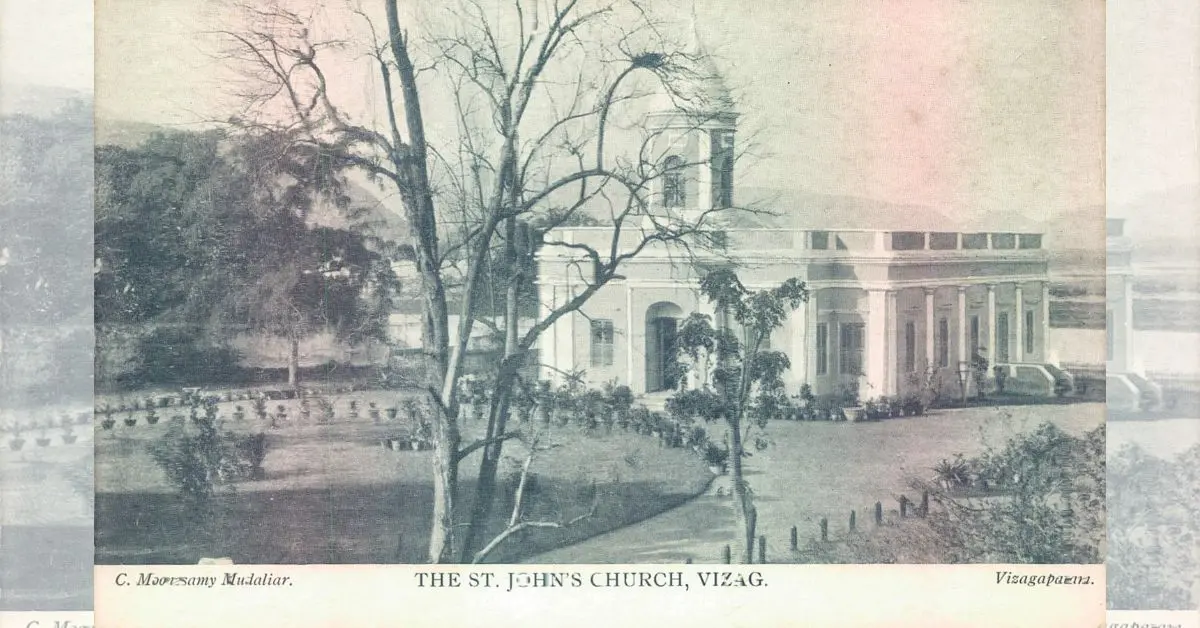
St John’s Church, Vizagapatam c 1910
The organ at St John’s Church, Vizag was built in 1859 by the theatre pipe organ makers of the day, Bryceson & Co of London. The East India Company had similar organs constructed and shipped to St Andrew’s Cathedral in Singapore and St John’s in Hong Kong. The organ had a pneumatically operated bellows and was the last of that type of organ before electrically operated organs were designed. Organs of this vintage are highly valued for their antiquity in the music industry. The pipe organ was functional until recent years and has been surpassed by digital music technology.
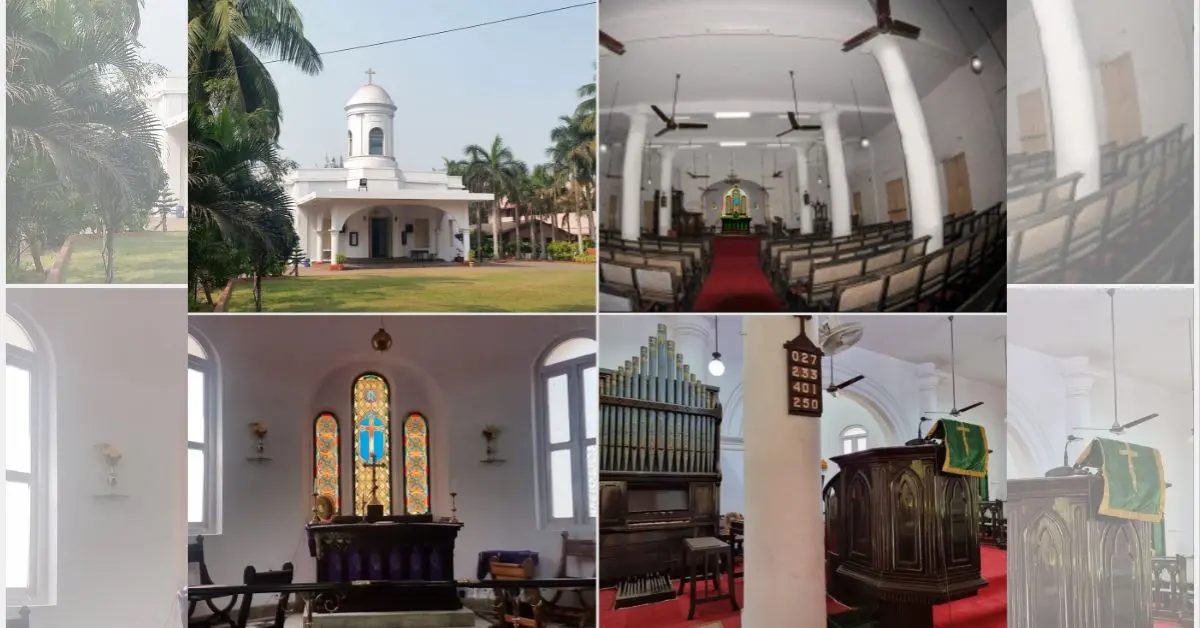
St John’s Church, Visakhapatnam c. 2025
During the early years, the St John’s congregation were soldiers from the Vizagapatam garrison, and its most regular Chaplains were the London Missionary Society (LMS) missionaries. The demand for a place of worship for the soldiers’ families resulted in the building of the LMS English Church on Thomson Street. A Trustee of St John’s, Major Brett was also a Trustee of the LMS English Church, and the congregations of the two were the English and Eurasian families of Soldierpet. When the LMS sold their properties to the Canadian Baptist Missions in 1910, the English Chapel was renamed the Union Chapel, and a condition of the sale was the continued use of the building for Anglican services for several years.
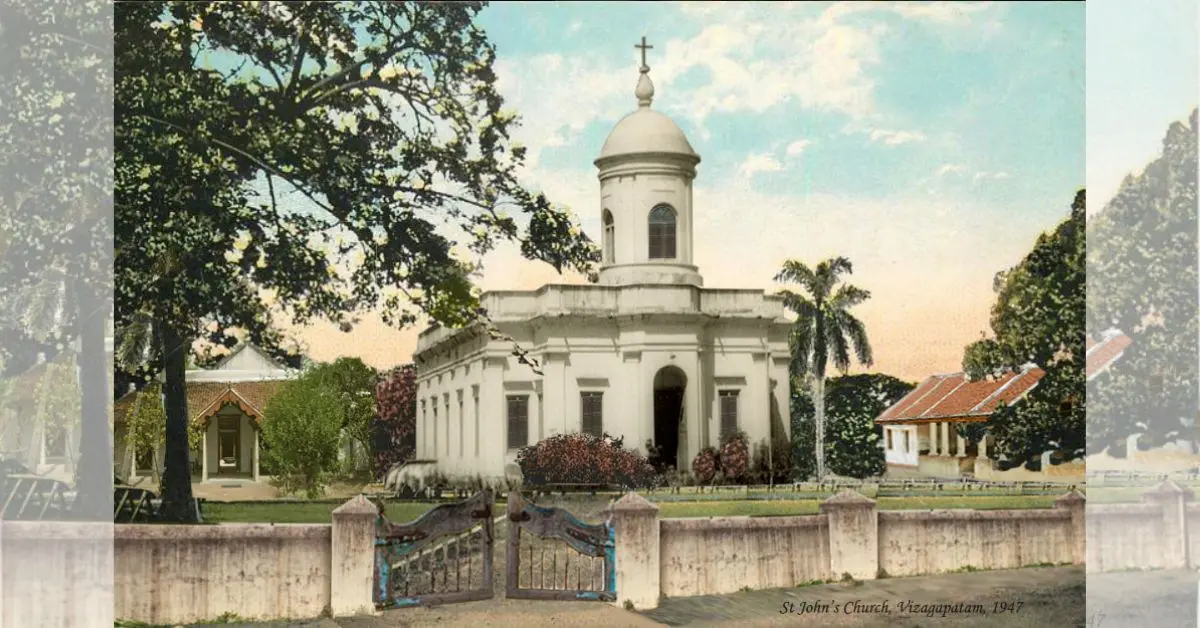
St John’s Church with Parsonage on its right and School on its left c 1947
St John’s Parish School, also called the Garrison School, was established in the building next to the church in the St John’s Compound. The school had a chequered history, which resulted in its opening and closing on many occasions, depending on the government’s funding. Soldiers were paid an allowance of Rs 7 per child to have them educated in the Garrison School, which would at times have a teacher when the Church had a Chaplain. In 1923, the growing band of Canadian Baptist Missionaries had started the Vizagapatam European & Anglo-Indian Protestant School in a rented building near Select Talkies, close to the old Vizag railway station. After another closing of the St John’s School, the Canadian Baptist Missionaries leased the school building and established the European Protestant School that grew and moved to Waltair in the 1960s to become today’s Timpany School.
Written by John Castellas, whose family belonged to Vizag for 5 generations. Educated at St Aloysius, migrated to Melbourne, Australia in 1966, former General Manager Engineering at Boeing & Qantas Airways, in retirement Lecturer in Aviation Management at Swinburne University and is a Vizag aficionado.
John authors heritage articles for YoVizag and Waltair Times and has contributed to Coffee Table Books for the Waltair Club and Andhra Medical College. He can be contacted at [email protected].Stay tuned to Yo! Vizag website and Instagram for more heritage articles.