
Now Reading: Yo! Exclusive: Visakhapatnam’s Medical Clowns Turn Hospital Wards Into Happy Places
-
01
Yo! Exclusive: Visakhapatnam’s Medical Clowns Turn Hospital Wards Into Happy Places
Yo! Exclusive: Visakhapatnam’s Medical Clowns Turn Hospital Wards Into Happy Places

Visakhapatnam-based Anantram Ganapati and his wife, Dr. Meenakshi Anantram, believe that the greatest medicine for the terminally ill isn’t always another prescription, but five uninterrupted minutes of genuine human connection. Through the Rohit Memorial Trust, established in memory of their son, the couple has spent years bringing comfort to patients and their families, believing that medical clowning is not merely a form of entertainment, but a way of restoring dignity, offering comfort and reminding patients that they are seen as people, not just medical cases.
On the occasion of International Clown Week, Anantram spoke to Yo! Vizag about the couple’s journey to becoming medical clowns, the principles that guide the practice, and why he believes empathy is an essential part of patient care.
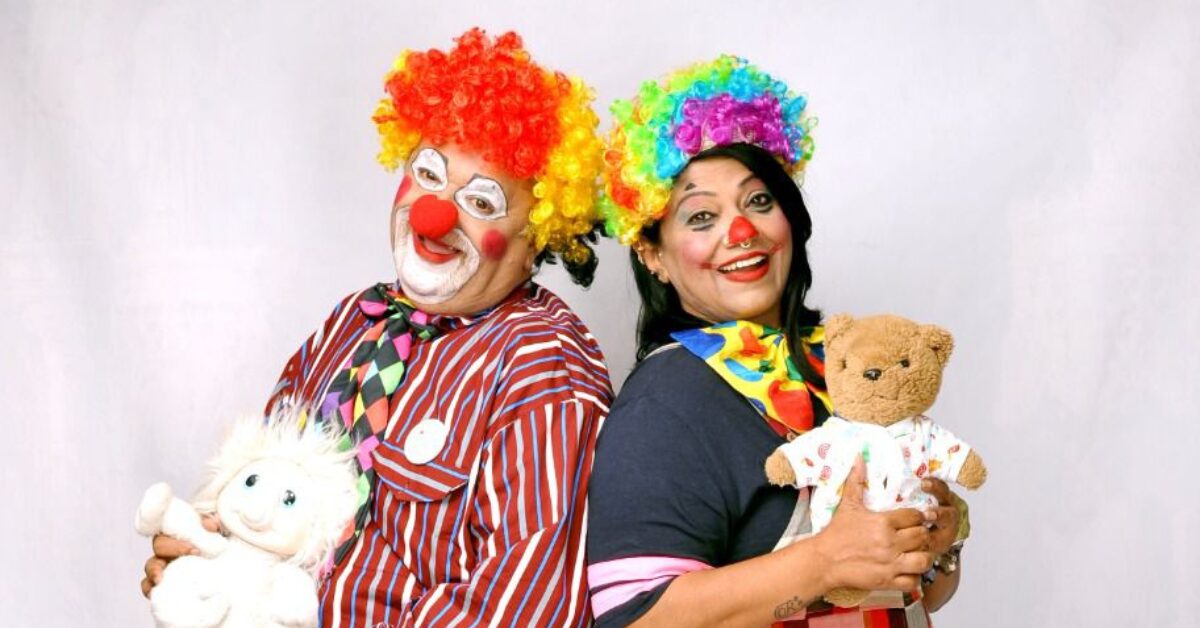
Clowning around with a purpose
Beyond diagnosis and treatment
Throughout the conversation, Anantram repeatedly returns to one word: empathy. In his view, while medical education places significant emphasis on diagnosis and treatment, there is scope for greater focus on communication and patient handling. He believes patients often need someone who can listen to their concerns and acknowledge the emotional aspects of illness, alongside clinical treatment. He advocates for hospitals to have trained personnel who can dedicate time to palliative care. “Even if someone spends five minutes a day just listening to a patient, it can make a meaningful difference,” he says.
One experience that continues to stay with Anantram took place in 2024, when he and Dr. Meenakshi conducted a medical clowning session at the paediatric ward of Aminu Kano Teaching Hospital in Nigeria, where they met children undergoing treatment for retinoblastoma. Among them was a young patient who had been refusing to eat despite his mother’s repeated efforts. The couple spent time talking to him, and simply keeping him company. Gradually, the child became more receptive and eventually finished his meal. “It was just one smile,” Anantram recalls. “But that smile helped a child get nourishment”.
Scientific research has long shown that positive emotions can trigger the release of hormones such as dopamine and endorphins, which help reduce stress and improve overall wellbeing. “When the mind is happier, the body is more willing to cooperate,” Anantram says.
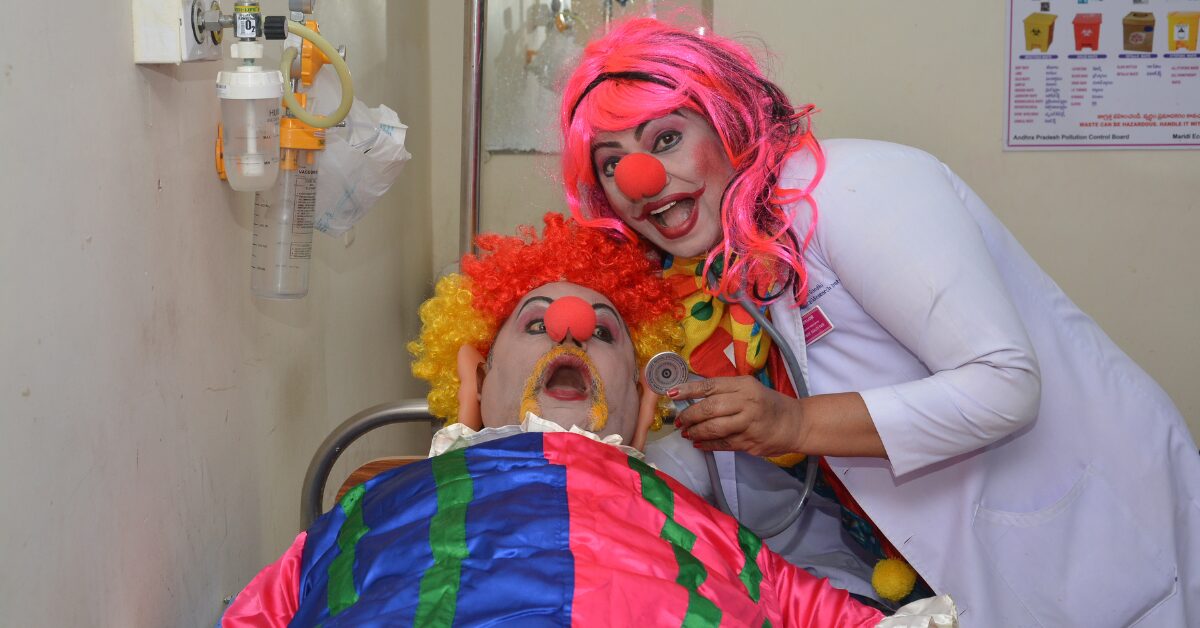
Bringing compassion into hospital wards, one interaction at a time.
Laughter with purpose
Becoming a medical clown requires far more than wearing a red nose. The Rohit Memorial Trust regularly conducts workshops where volunteers learn communication, active listening, body language and the principles of palliative care.
Supporting children with cancer and terminally ill patients inevitably comes with emotional challenges. “Feel for the person, but don’t carry that feeling home for too long,” Anantram highlights the importance of maintaining emotional boundaries. Volunteers are encouraged to connect with patients and their families, while also learning how to step away at the end of the day. He believes developing healthy coping mechanisms, whether through meditation, yoga or simple practices of gratitude, is just as important as caring for others. During training sessions, volunteers are also taught to recognise their emotional limits and maintain professional boundaries, ensuring they can continue supporting patients without becoming overwhelmed.
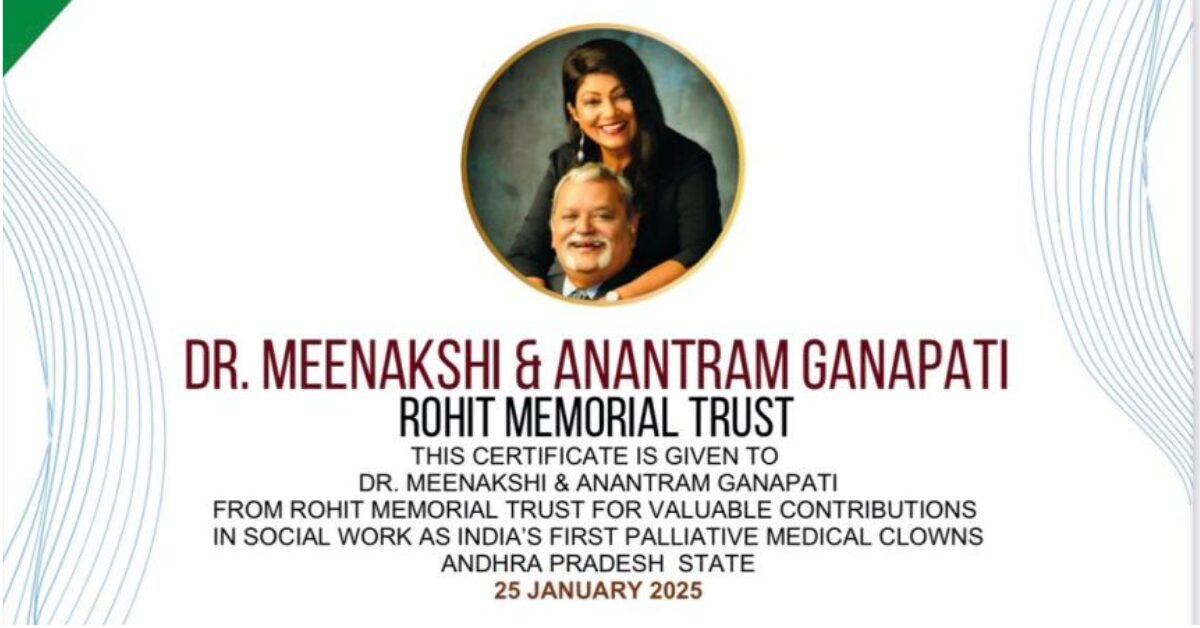
Anantram Ganapati and Dr. Meenakshi Anantram, received the Mahatma Gandhi Desh Seva Puraskar in 2025.
A culture of giving back
For Anantram, expanding medical clowning isn’t solely about launching large-scale awareness campaigns. Instead, he believes it begins with cultivating empathy in everyday life. “You don’t have to become a medical clown,” he says. “Give one or two hours a month to someone who needs you”. Whether it is teaching a child from an underprivileged background, spending time with residents at an old-age home or simply listening to someone who needs company, Anantram believes acts of kindness need not be extraordinary to make a difference. He encourages people to move beyond selective empathy, treat everyone with dignity and recognise that giving back starts with small, consistent actions. He also adds that empathy should not be driven by recognition or rewards, but by a genuine willingness to care for others.
Over the years, the Vizag-based medical clowns have emerged as pioneers of palliative medical clowning in India. Anantram Ganapati is a social scientist, author and trainer, while Dr. Meenakshi Anantram is a TEDx speaker, author, podcaster and Founder & CEO of Razzmatazz Entertainment Networks. In recognition of their contribution to palliative care and community service, they were honoured with the Mahatma Gandhi Desh Seva Puraskar in 2025.
This International Clown Week, their work as medical clowns in and beyond Vizag serves as a reminder that beyond the red nose and colourful costumes lies a simple act that can make a lasting difference.
To learn more about the Rohit Memorial Trust and its initiatives, visit their official website.
Also read: Girls vaccinated against cancer
Stay tuned to Yo! Vizag website and Instagram for more such articles.