Now Reading: Stories That Sing: Nishita Mohta at the Vizag Junior Literature Fest
- 01
Stories That Sing: Nishita Mohta at the Vizag Junior Literature Fest
Stories That Sing: Nishita Mohta at the Vizag Junior Literature Fest

The LitLantern for Culture and Literature Welfare Society successfully hosted the sixth edition of the Vizag Junior Lit Fest at Hawa Mahal, Visakhapatnam, on November 8 and 9. The weekend was a vibrant celebration of imagination, discovery, and the joy of growing through stories. The festival’s core aim was to introduce children to the world of books and ignite a lifelong love for reading, literature, and language.The Lit Fest inspired children to imagine, be curious, and actively participate in a variety of activities; including storytelling sessions, theatre and performance art workshops, and interactive sessions with their parents, resulting in a well-balanced and enriching festival experience.
Voices Behind the Stories:
Yo! Vizag had the wonderful opportunity to speak with some of the most creative minds and inspiring voices from the world of children’s literature who headlined the LitLantern Festival in Vizag. These individuals are shaping the next generation through stories that inform, entertain, and empower.
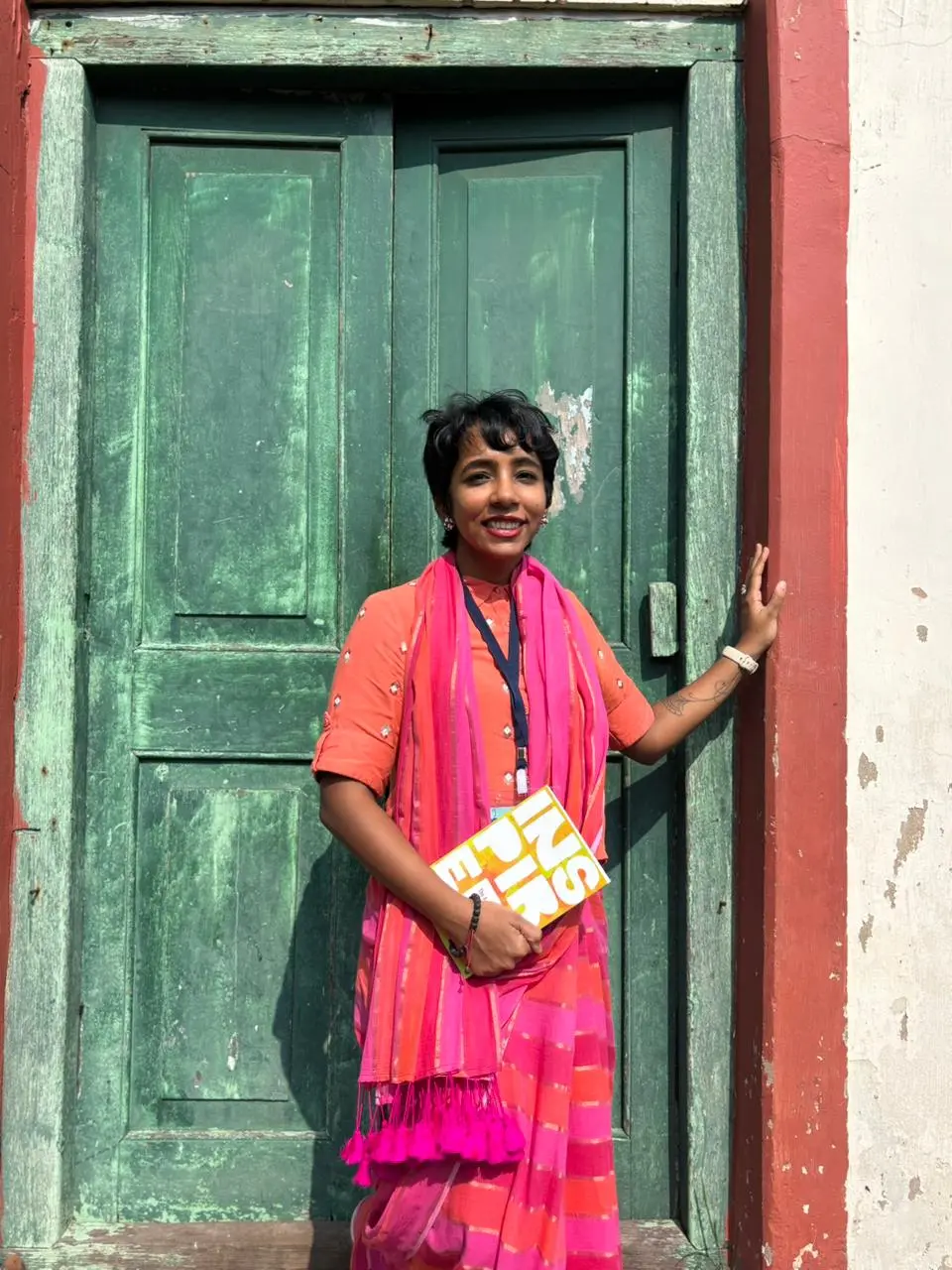
One such voice is Nishita Mohta who captivated audiences with her infectious passion for language and storytelling. An author, poet and a voice artist, her body of work celebrates both the sound and sense of words.
Exclusive Interview:
What follows is an insightful one-on-one conversation with Shobha,in which she shares her creative process, her multicultural influences, and what she hopes young readers will take away from her stories.
Interviewer: Can you briefly tell us about “mindblocks”?
Nishita: Over time, I began to notice that while we talk a lot about inspiration, we rarely discuss what happens when it’s missing. “I’m feeling creatively blocked” is something almost every creative person has said, but what does that really mean? How do we understand why we’re blocked and what to do about it?
Feeling stuck isn’t a single thing. It can stem from many sources like self-doubt, exhaustion, fear, or comparison. That realization led me to map out those different layers. As an educator and consultant, I noticed these same patterns in my students and the creative founders I worked with. That’s when I realized how universal “mindblocks” are and that’s how the concept was born.
Interviewer: How did these observations lead you to write your book?
Nishita: Initially, I was journaling just for myself. Over time, I began sharing small reflections online; a visual series where I paired an illustration with two voices. One of fear saying, “I’m not good enough,” and the other of creative confidence responding with compassion.
When I started posting these on Instagram, so many people responded saying, “This is exactly what I needed to hear.” That’s when I realized how important this conversation was. Eventually, people began asking if I had a book and that’s when it struck me that these ideas deserved to exist in a tangible form.
Interviewer: Who is the book’s target audience?
Nishita: The primary audience are creative professionals like designers, artists, writers, and others in similar fields. But I’d also love for young adults, even 14 or 15 and above, to read it. That’s often when creative self-doubt begins, and there aren’t enough books that address it in an honest, conversational way. I wanted the tone to feel real and approachable; not academic or intimidating.
Interviewer: The handwritten sections in the book are quite striking. What inspired that choice?
Nishita: I wanted the design to feel personal as if I’m sitting across from the reader. At first, I even thought of handwriting the entire book! But of course, that wasn’t practical, so I kept it to the introduction. My editor and I decided to preserve a conversational tone, even if something wasn’t “perfect” English, if it sounded authentic, we kept it.
Interviewer: You’ve chosen to live and work in Goa. How has your environment influenced your personal and professional growth?
Nishita: My connection with Goa goes back to my architecture internship about ten years ago. I got to see a different side of it, the creative communities, the calm, the natural beauty. I’ve always valued peace and balance in my surroundings.
After working in cities like Delhi, Ahmedabad, and Ladakh, I realized I wanted my lifestyle to shape my work and not the other way around. That calm, grounded energy definitely influences how I create and collaborate.
Interviewer: In your consulting work, you help creative founders build better systems. What common challenges do you see?
Nishita: Many creatives struggle to see themselves as businesses. Interestingly, founders who come from business backgrounds often find it easier to run creative studios because they already understand structure. But those from purely creative backgrounds often find project management and leadership challenging. One of the biggest patterns I see is that being a great creative doesn’t automatically make someone a great manager.
Interviewer: Your book follows an A-to-Z format. How did that idea come about?
Nishita: It wasn’t planned at all! I initially imagined it as a series of letters; like “Dear Creative Who Feels Out of Time.” But as I developed the material, I realized the book was really about giving creatives a vocabulary to describe their internal experiences.
When it comes to creative blocks, our vocabulary is limited. I wanted to give readers words to identify what they’re feeling. The A-to-Z format brought both clarity and structure.
Interviewer: What’s been the hardest chapter in your professional journey so far?
Nishita: A few years into freelancing, I was doing everything from exhibition design to curation mentoring and I loved that variety. But after a while, I realized that if you go too much with the flow, you tend to lose direction.
The biggest challenge was learning to narrow down and focus. It’s something I still practice and understand that I can’t do everything at once. Some interests can stay as hobbies; not everything needs to become a career path.
Interviewer: Outside of work, what keeps you inspired?
Nishita: Honestly, my client work itself inspires me! I’m fortunate to work with people who genuinely value what I bring. Beyond that, I love conversations with creatives, friends, or anyone curious. Ideas often emerge from those exchanges. I’m not even searching for ideas anymore; they just keep finding me!
Interviewer: Finally, what’s next for you?
Nishita: The next chapter is about teaching ,helping more creatives build systems and sustainable careers. I want to design workshops that connect creative passion with essential business skills. I deeply believe in creative entrepreneurship and structure is what helps it truly thrive.
The Vizag Junior Lit Fest 2025 was a heartwarming reminder that literature has the power to inspire even the youngest minds. Through initiatives like the LitLantern for Culture and Literature Welfare Society, children in Visakhapatnam are being given a platform to imagine, express, and grow.
Through her journey as a consultant, educator, and author, Nishita Mohta reminds us that creativity doesn’t thrive in chaos alone.It flourishes within structure, reflection, and self-awareness. Her work bridges the gap between artistic passion and practical systems, showing that organisation and imagination can coexist beautifully.
Stay tuned to Yo! Vizag website and Instagram for more such articles.