
Now Reading: National Engineers’ Day: Tracing the Story Behind Vizag Port
-
01
National Engineers’ Day: Tracing the Story Behind Vizag Port
National Engineers’ Day: Tracing the Story Behind Vizag Port

National Engineers’ Day, observed on September 15 every year in India, is the perfect occasion to look back at the contributions that shaped our beloved City of Destiny. When it comes to engineering marvels here, nothing quite compares to Vizag Port and its harbour. Building the port was an engineering feat unlike anything the city had attempted before, which went on to transform Vizag itself, reshaping its landscape, economy, and property values by opening it up to trade. As we pay homage to the engineers who made it possible, let’s take a walk down memory lane and revisit the milestones that helped build the city we know today.
National Engineers’ Day: Tracing the Story Behind Vizag Port
Port Inception and Everything That Followed
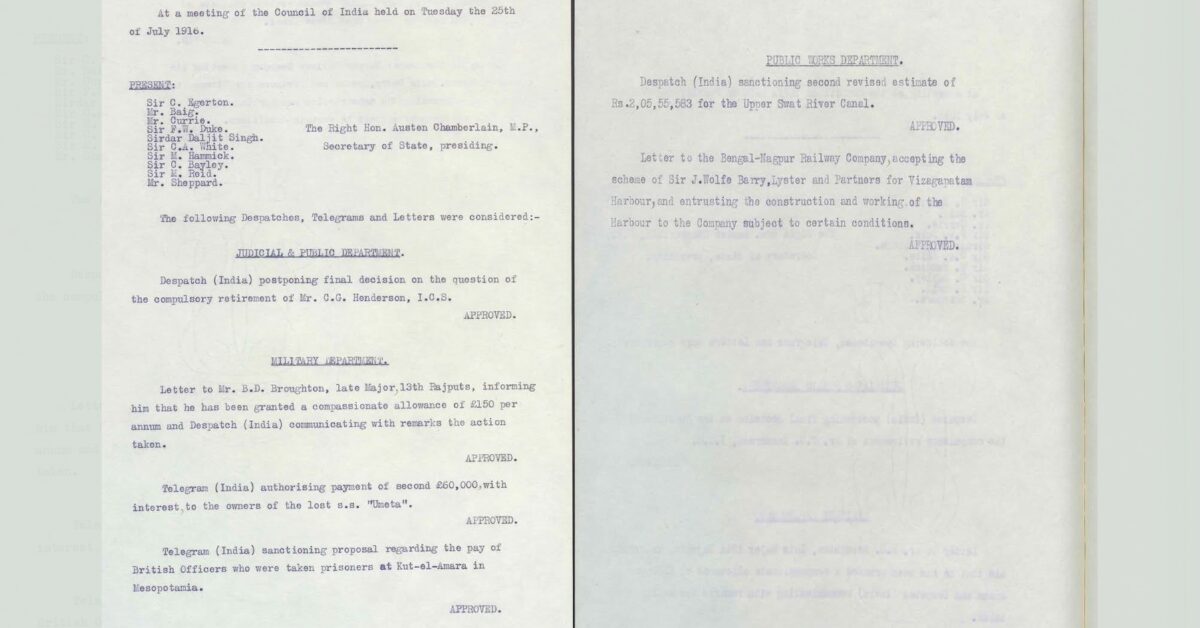
Around 1083 CE, Visakhapatnam was known as Kulottunga Chola Pattana and was already an active trading centre. By 1682, it had become a settlement of a branch of the East India Company, trading with Burma, the UK and USA in commodities such as muslin cloth, manganese ore, oilseeds, jaggery, jute, indigo, hides and skins. By the 19th century, the need for a proper harbour at Vizag had become increasingly evident, with a British Survey Party report in 1858 and a later 1877 report titled Vizag: The Port of Central Provinces both highlighting the need for its construction.
Several proposals were considered over the years, but the project gained momentum after the First World War. Col. H. Cartwright Reid of the British Admiralty proposed the construction of a harbour at the mouth of the Meghadri Gedda River, and the Government eventually approved the project.
The harbour was planned between Dolphin’s Nose and Ross Hill, taking advantage of the natural protection provided by the surrounding terrain from the cyclones that regularly affect the east coast.
Construction Challenges and the Engineers Behind the Port
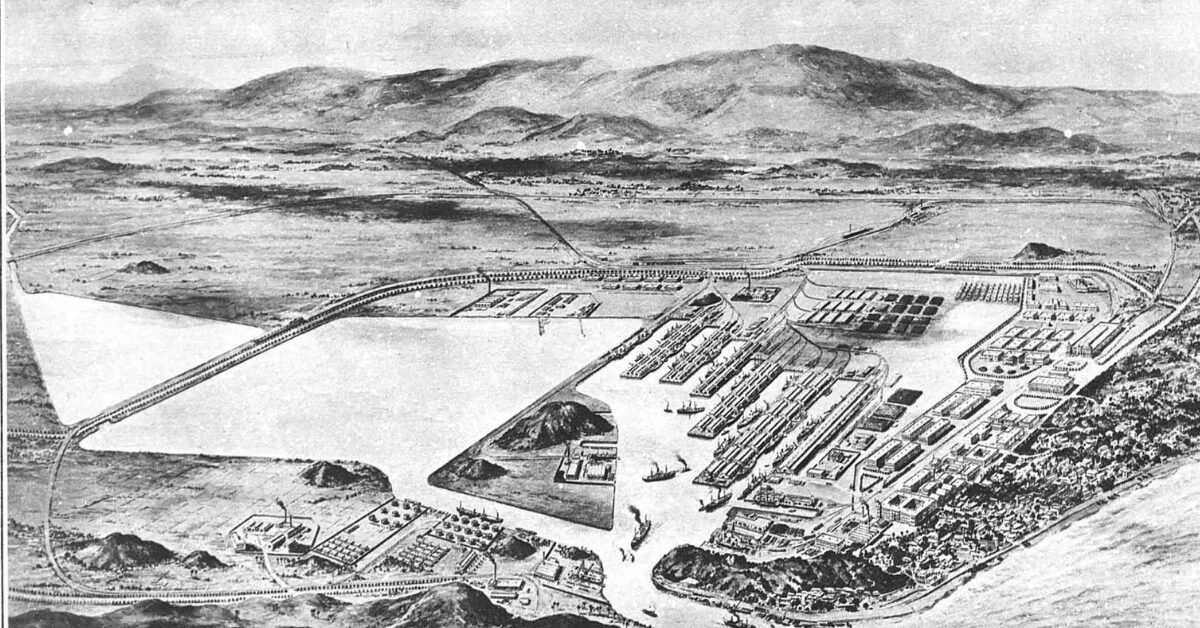
Vizag Harbour, 1923, from the plans of Sir John Wolfe Barry & Partners, published in The Graphic, London. Collection of John Castellas, Melbourne. (Source: Vizagapatam Vizag)
Construction of the Inner Harbour began in 1927, with the Bengal Nagpur Railway undertaking the project to provide a sea outlet for manganese ore from the Central Provinces.
One of the major engineering challenges was managing the sand and silt at the harbour entrance. Sir M. Visvesvaraya, a pioneer civil engineer, statesman and the Diwan of Mysore, proposed an unusual solution: sinking two old ships, S.S. Janus and S.S. Wellesdon, at the mouth of the river to serve as breakwaters, around which a rubble mound was constructed. The project involved extensive dredging to create the harbour and its channels, for which the Suction Dredger Vizagapatam, designed by Sir J.H. Biles & Co., and the Dipper Dredger Waltair were brought in.
The engineering work was led by figures including Col. Herbert Cartwright Reid, W.C. Ash and D.B. Rattenberry. Reid championed the Inner Harbour design and drew on experience from earlier harbour projects, while Ash and Rattenberry played key roles in executing the construction.
The Port opened to ocean traffic on October 7, 1933, when the passenger vessel S.S. Jaladurga entered the newly constructed harbour. It was formally inaugurated later, on December 19, 1933, by Lord Willingdon, the then Viceroy and Governor-General of India.
From Engineering Milestone to Global Recognition
In the World Bank’s Container Port Performance Index (CPPI) 2023, Visakhapatnam Port ranked 19th among 405 ports worldwide, making it the first Indian port to enter the global top 20. It also moved up significantly from its previous ranking. In the CPPI 2025, Visakhapatnam Port was ranked 104th globally. The decline doesn’t necessarily point to a single cause, since the index mainly measures how long container ships spend in port, and rankings can also shift due to broader disruptions in global shipping.
Nevertheless, the story of Vizag Port remains worth revisiting on National Engineers’ Day. From its early days as a maritime trading hub to the complex engineering behind its sheltered harbour, the Port has played a defining role in shaping the city we know today.
Also read: Local Inventions of Vizag That Put Us on the Map
Stay tuned to Yo! Vizag website and Instagram for more such articles.